





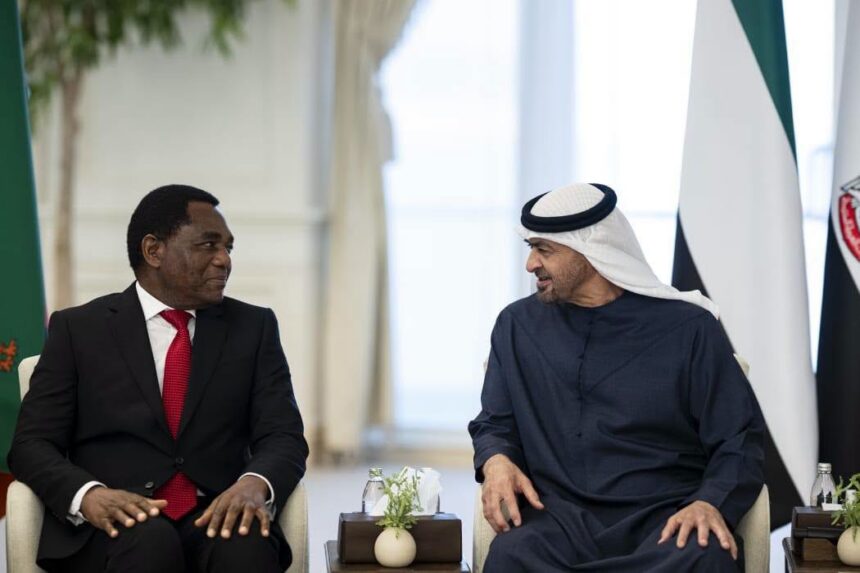
Zambia and the United Arab Emirates are continuing to strengthen their diplomatic and economic relationship as President Hakainde Hichilema met with UAE President His Highness Sheikh Mohamed bin Zayed Al Nahyan at the Presidential Palace in Abu Dhabi. The meeting focused on expanding cooperation between the two countries and identifying opportunities that can deliver benefits for their citizens. Zambia and the UAE have taken steps in recent years to deepen official relations, including the opening of diplomatic missions in each other’s capitals. The engagement reflects Zambia’s efforts to build stronger international partnerships as it pursues its national development priorities. It also highlights the growing importance of bilateral cooperation in areas such as investment, trade, infrastructure and economic development.
President Hichilema said the discussions centered on deepening bilateral ties for the mutual benefit of the Zambian and Emirati people. The relationship between Zambia and the UAE has developed through diplomatic engagement and increasing cooperation between the two countries. The establishment of diplomatic missions in Lusaka and Abu Dhabi provides an important channel for government-to-government communication and economic engagement. Diplomatic missions can also support citizens, facilitate business relationships and help both countries coordinate on shared interests. The latest presidential meeting provides another opportunity to advance that relationship at the highest level.
The UAE remains an important partner for Zambia as the Zambian government implements what President Hichilema refers to as the Grow Zambia Agenda. The agenda is linked to the government’s broader focus on economic growth, investment and development. International partnerships can play a role in supporting these objectives by creating opportunities for investment, trade and cooperation in priority sectors. For Zambia, stronger relations with the UAE can provide a platform for engagement with one of the Middle East’s major commercial and financial centers. The effectiveness of such partnerships will depend on the specific agreements, investments and projects that emerge from continued diplomatic discussions.
The meeting in Abu Dhabi also demonstrates the role of high-level diplomacy in supporting Zambia’s international economic engagement. Presidential meetings can create space for discussions that extend beyond routine diplomatic relations and address strategic areas of cooperation. Zambia has continued to seek partnerships that can support economic development while strengthening its position in international markets. The UAE’s established role as a major global hub for business, finance, logistics and investment makes its relationship with Zambia relevant to these objectives. Continued engagement between the two governments could therefore provide opportunities for closer cooperation across several areas of mutual interest.
The two leaders also addressed an important matter of national solidarity and respect. President Hichilema conveyed condolences to President Sheikh Mohamed bin Zayed Al Nahyan and the people of the United Arab Emirates following the passing of His Highness Sheikh Ahmed bin Rashid Al Maktoum. Such expressions of sympathy form part of diplomatic relations and demonstrate respect between nations during periods of loss. They also reinforce the personal and institutional relationships that support cooperation between governments. The message from the Zambian President therefore combined diplomatic engagement on future cooperation with recognition of an important moment for the UAE.
Zambia’s relationship with the United Arab Emirates has significance beyond political meetings between national leaders. Strong diplomatic relations can support private sector engagement, encourage investment and create opportunities for companies and institutions in both countries to establish partnerships. The UAE has developed extensive international connections in areas including aviation, logistics, finance, energy, tourism and infrastructure. Zambia, meanwhile, has significant economic interests in agriculture, mining, energy, tourism and other sectors that require investment and market access. Greater engagement between the two countries could create opportunities in these areas, depending on future agreements and commercial developments.
The opening of diplomatic missions in each other’s capitals represents an important foundation for this relationship. Embassies provide formal channels through which governments can manage diplomatic affairs and support economic and cultural cooperation. They also make it easier for businesses, investors and citizens to access official assistance and information. For Zambia, maintaining an active diplomatic presence in Abu Dhabi can support efforts to attract investment from the UAE and strengthen connections with the wider Gulf region. For the UAE, diplomatic engagement in Lusaka provides a direct channel for cooperation with Zambia and opportunities to develop relationships within the Southern African region.
President Hichilema’s meeting with Sheikh Mohamed bin Zayed Al Nahyan therefore comes within a broader effort to strengthen Zambia’s international partnerships. The focus on mutual benefit is important because sustainable bilateral relations depend on practical outcomes for both countries. Diplomatic commitments can provide a framework, but their long-term impact depends on concrete cooperation, investment decisions, trade activity and projects that improve economic and social outcomes. Zambia’s engagement with the UAE will continue to be shaped by these practical considerations. Future developments will show how the strengthened political relationship translates into specific opportunities for the Zambian economy and its people.
The Abu Dhabi meeting also reflects the value of maintaining direct communication between national leaders. High-level discussions can help countries identify shared priorities and address areas where greater cooperation may be possible. For Zambia, continued engagement with the UAE can form part of its broader strategy of attracting international investment and expanding economic relationships. For the UAE, deeper cooperation with Zambia can strengthen its engagement with an important African economy and create opportunities for commercial partnerships. The relationship therefore has potential significance for both countries, although individual outcomes will depend on the agreements and initiatives that follow.
The latest engagement between Zambia and the UAE highlights a relationship that is developing through diplomacy, economic cooperation and direct leadership engagement. President Hakainde Hichilema’s meeting with President Sheikh Mohamed bin Zayed Al Nahyan provided an opportunity to discuss stronger bilateral ties while reaffirming the importance of cooperation for the people of both countries. The condolences offered following the passing of Sheikh Ahmed bin Rashid Al Maktoum also added an important humanitarian dimension to the visit. As Zambia implements its Grow Zambia Agenda, continued partnerships with countries such as the UAE can form part of its wider international economic engagement. The next stage will depend on turning diplomatic discussions into practical cooperation that delivers measurable opportunities and benefits for Zambia and the United Arab Emirates.