

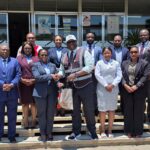

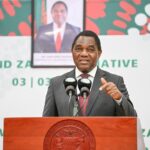
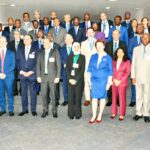



Government has commenced the development of a communication action plan aimed at strengthening public understanding of Zambia’s National Green Growth Strategy and the opportunities it can create for communities across the country. The process officially got underway yesterday in Lusaka, where Permanent Secretary Dr Dout Chibamba opened a workshop focused on developing a clear and coordinated approach to communicating green growth priorities. The initiative comes as Government seeks to ensure that the principles and opportunities associated with green growth are understood beyond policy and institutional circles. Effective communication will be important in helping citizens understand how the strategy relates to their livelihoods, businesses and communities. The workshop therefore represents an important step towards making green growth more accessible and relevant to the wider public.
In his remarks, Dr Chibamba called for a clear, practical and coordinated communication approach that can help citizens understand the National Green Growth Strategy and the opportunities it presents. He emphasised that communication should go beyond simply sharing information about Government programmes and policies. Instead, it should help people understand how green growth can support sustainable economic development and improve livelihoods. This includes presenting opportunities in ways that reflect the everyday realities and needs of different communities and groups. A well-designed communication strategy can also help ensure that the public understands how environmental sustainability and economic development can work together.
Dr Chibamba stressed that green growth opportunities must be aligned with the realities and needs of the people. This means that communication efforts should take into account the different circumstances of communities, businesses, young people, farmers and other groups that may benefit from the implementation of the strategy. The message around green growth must be practical and understandable rather than limited to technical policy language. When people can clearly see how a national strategy connects to their own economic activities and future opportunities, they are more likely to engage with it. The communication action plan will therefore need to ensure that information reaches audiences in a way that is relevant to their circumstances.
The Permanent Secretary also emphasised the role of public institutions, Government agencies and other key stakeholders in promoting the National Green Growth Strategy. He noted that successful implementation will require active participation from institutions responsible for communicating with and supporting communities. Different stakeholders have an important role to play in ensuring that information about green growth reaches people consistently and accurately. Coordinated communication can also reduce confusion and prevent different institutions from sending disconnected messages about the strategy and its objectives. This collaborative approach will be important as Government works to build broader awareness and participation around green growth.
Another key issue highlighted during the workshop was the need to identify communication challenges and develop practical ways of reaching different audiences. Dr Chibamba noted that the communication action plan should provide approaches that can sustain engagement at different levels. This requires an understanding of the information needs of various audiences and the channels that can reach them effectively. Communication should also remain an ongoing process rather than a once-off campaign, particularly as the implementation of the National Green Growth Strategy progresses. Sustained engagement can give citizens opportunities to better understand developments, ask questions and recognise the practical benefits associated with green growth.
Effective communication will also play an important role in creating a common understanding of what green growth means and why it matters to Zambia’s development agenda. Green growth can involve a range of economic and environmental opportunities, but these concepts can be difficult for the public to understand if they are presented only through technical terminology. Clear communication can help translate policy objectives into information that people can understand and relate to their own lives. It can also help explain how sustainable economic opportunities can contribute to improved livelihoods while supporting responsible use of natural resources. Building this shared understanding will be essential for encouraging meaningful public participation in the implementation of the strategy.
The Ministry of Green Economy and Environment has reaffirmed its commitment to providing leadership throughout the process and ensuring coordinated action in promoting the National Green Growth Strategy. This leadership will be important in bringing together Government institutions and other stakeholders around a common communication framework. The ministry’s role will also help ensure that communication efforts remain connected to the broader objectives of the strategy and the country’s sustainable development priorities. A coordinated framework can provide stakeholders with clearer guidance on the messages to communicate, the audiences to reach and the approaches to use. It can also strengthen consistency in the way green growth opportunities are presented to the public.
The communication action plan is expected to provide a framework for building a common understanding of green growth and translating its opportunities into meaningful benefits for the people. This will require communication that focuses not only on environmental considerations but also on the economic and social opportunities linked to sustainable development. Citizens need to understand how green growth can create opportunities while contributing to the responsible management of resources. Businesses and other economic actors can also benefit from clearer information about the direction of Government policy and potential areas for participation. By connecting the National Green Growth Strategy with practical opportunities, the communication plan can help make the strategy more relevant to people across the country.
The workshop in Lusaka marks an important stage in Government’s efforts to improve awareness of the National Green Growth Strategy and its potential contribution to sustainable economic development. The success of the communication action plan will depend on how effectively it identifies different audiences, addresses communication gaps and creates opportunities for continued engagement. It will also require cooperation between Government institutions, agencies and other stakeholders involved in promoting and implementing green growth initiatives. With strong coordination and clear messaging, the process can help citizens gain a better understanding of the opportunities available to them. The ultimate goal is to ensure that green growth is not viewed only as a Government policy, but as a development approach that can contribute to sustainable economic opportunities and better livelihoods for people across Zambia.