




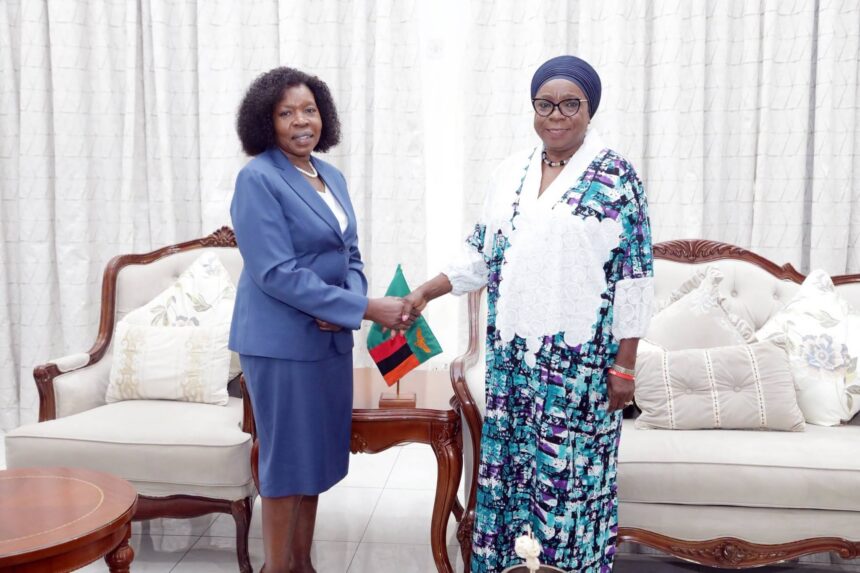
The Government of Zambia has expressed profound appreciation to United Nations Resident Coordinator in Zambia, Ms. Beatrice Mutali, for her dedicated service, partnership and contribution to the country’s development during her four-year tenure. As she concludes her assignment, the Zambian Government has recognised the important role she played in strengthening cooperation between the United Nations and Zambia. Her tenure took place during a period marked by economic pressures, public health emergencies, climate-related shocks and a devastating drought that affected communities and livelihoods across the country. Despite these challenges, the United Nations continued to work closely with the Zambian Government to strengthen national responses, support vulnerable communities and build resilience. Her departure therefore marks the end of an important chapter in Zambia’s development partnership with the United Nations.
The appreciation was conveyed on behalf of the Government and people of Zambia by Vice President Dr. W.K. Mutale-Nalumango, who commended Ms. Mutali for the commitment, friendship and goodwill she demonstrated throughout her time in the country. Her four-year tenure provided an opportunity to deepen cooperation between Zambia and the United Nations across several important areas of national development. The Vice President noted that the partnership went beyond formal cooperation and reflected a relationship built on mutual respect and a shared commitment to improving the lives of Zambian people. Ms. Mutali’s contribution came at a time when Zambia needed strong coordination among Government, development partners and international organisations. Her leadership helped maintain the United Nations’ engagement with national priorities while responding to emerging challenges.
A major part of this cooperation has been the United Nations Sustainable Development Cooperation Framework 2023–2027, which remains an important mechanism for aligning United Nations support with Zambia’s development priorities. The framework complements the country’s Eighth National Development Plan by helping coordinate development assistance around national objectives and the needs of communities. Through this approach, cooperation has supported sectors that directly affect social and economic wellbeing. The Government’s recognition of the framework also highlights the importance of strong coordination between national development planning and international development assistance. As Zambia prepares for its next phase of national planning, the experience gained through the current framework provides an important foundation for continued collaboration.
During Ms. Mutali’s tenure, the United Nations and the Zambian Government worked together across a broad range of sectors. These included education, health, agriculture, food and nutrition security, social protection, youth empowerment, gender equality, climate resilience and democratic governance. Each of these areas plays a significant role in Zambia’s efforts to achieve inclusive and sustainable development. Support in these sectors has been particularly important as communities have faced economic pressures, climate impacts and disruptions to livelihoods. The Government’s acknowledgement of this cooperation reflects the value of coordinated efforts that address both immediate needs and longer-term development priorities.
The devastating drought was among the major challenges experienced during Ms. Mutali’s time in Zambia. Climate-related shocks can place significant pressure on agriculture, food supplies, household incomes and access to essential services, particularly for vulnerable communities. The United Nations’ continued engagement with Government during difficult periods helped strengthen efforts to respond to these pressures and build resilience. Agriculture and food and nutrition security remain especially important to Zambia because many households depend on farming and related economic activities. Strengthening resilience to drought and other climate shocks will therefore remain an important part of the country’s development agenda.
The Government also highlighted Ms. Mutali’s commitment to ensuring that no one is left behind. This principle has been reflected in efforts to promote greater inclusion and expand opportunities for women and girls across Zambia. Her support for the empowerment and leadership of women, including through the Zambia Chapter of the African Women Leaders Network, has contributed to efforts aimed at strengthening women’s participation in leadership and development. Greater participation by women in decision-making can help broaden perspectives and improve the responsiveness of institutions and development programmes. The emphasis on women and girls also demonstrates the importance of ensuring that national development benefits people across different communities and social groups.
Youth empowerment has also remained an important area of cooperation between Zambia and the United Nations. Zambia has a young population with significant potential to contribute to economic growth, innovation and community development. Creating opportunities for young people requires investment in education, skills, employment, entrepreneurship and participation in public life. United Nations support in these areas can complement Government initiatives designed to equip young people with the knowledge and opportunities they need to build productive futures. Continued attention to youth empowerment will be essential as Zambia seeks to strengthen inclusive economic development.
The partnership has also extended to social protection, health and education, which are central to improving living standards. Strong social protection systems can help vulnerable households cope with economic shocks while maintaining access to essential services. Investment in health and education can strengthen human capital and provide people with greater opportunities to participate in the economy. The cooperation between Zambia and the United Nations has helped keep these priorities within the broader national development conversation. Maintaining progress in these areas will require continued collaboration between Government, development partners, civil society and other stakeholders.
As Zambia looks towards the preparation of the Ninth National Development Plan and the next United Nations Sustainable Development Cooperation Framework, the Government has indicated that it wants to build on the partnership established during Ms. Mutali’s tenure. The next planning cycle will provide an opportunity to assess progress, identify emerging priorities and strengthen coordination around Zambia’s development aspirations. Continued alignment between national plans and United Nations support can help ensure that resources and programmes respond to the country’s most pressing needs. The transition also provides an opportunity to incorporate lessons from recent economic, health and climate-related challenges. A strong partnership will remain important as Zambia works towards more resilient and inclusive development.
Ms. Mutali’s departure also carries a personal dimension, reflecting the relationships that developed during her years in Zambia. Her statement that Zambia had become more than a duty station and had become a home demonstrates the depth of the connection she formed with the country and its people. The Government has welcomed this sentiment and expressed gratitude for the friendship she showed towards Zambia during her assignment. Such relationships can strengthen international cooperation because development partnerships depend not only on formal frameworks but also on trust, communication and mutual respect. Her time in Zambia has therefore left both institutional and personal connections that can continue beyond the end of her assignment.
The Government of Zambia has assured the United Nations and other development partners of its continued commitment to working together to advance national development aspirations. This commitment will remain important as Zambia addresses economic pressures, climate change, food security, public health needs and other development challenges. Strong partnerships can help mobilise technical expertise, resources and coordinated action in support of national priorities. The Government’s message also signals its intention to maintain the progress achieved through existing cooperation frameworks while preparing for the next stage of development planning. The continuation of this partnership will be particularly important as Zambia seeks practical solutions that improve opportunities and living conditions for its people.
Dr. W.K. Mutale-Nalumango’s message represents a formal expression of gratitude to Ms. Beatrice Mutali for her four years of service as United Nations Resident Coordinator in Zambia. Her tenure was defined by cooperation during challenging circumstances and by efforts to strengthen the relationship between the United Nations and the Zambian Government. From supporting responses to drought and other crises to advancing development priorities in education, health, agriculture, social protection, gender equality and youth empowerment, the partnership covered issues that directly affect the lives of Zambians. As Ms. Mutali begins her next assignment, Zambia has expressed its hope that the positive experiences and memories she gained in the country will remain with her. The Government and people of Zambia have made clear that she will continue to be regarded as a friend of the country, while the United Nations and Zambia move forward with a renewed commitment to advancing sustainable and inclusive national development.