





The Presidential Delivery Unit (PDU), in collaboration with the Media Initiative on School Health (MISH) and Healthy Learners, has convened a two day Media Owners Engagement Meeting to strengthen media understanding and support for the Zambia School Health Programme. The meeting has brought together media owners, government institutions and development partners to promote greater awareness of the programme and encourage stronger collaboration in improving school health services across the country. By engaging the media, organisers aim to increase public understanding of the programme’s objectives while encouraging informed reporting on one of Zambia’s most important education and health initiatives. The engagement also highlights the role of communication in driving accountability, citizen participation and support for national development programmes. As Zambia continues investing in the wellbeing of schoolchildren, the media is expected to become an important partner in sharing information that helps communities appreciate the value of school health services.
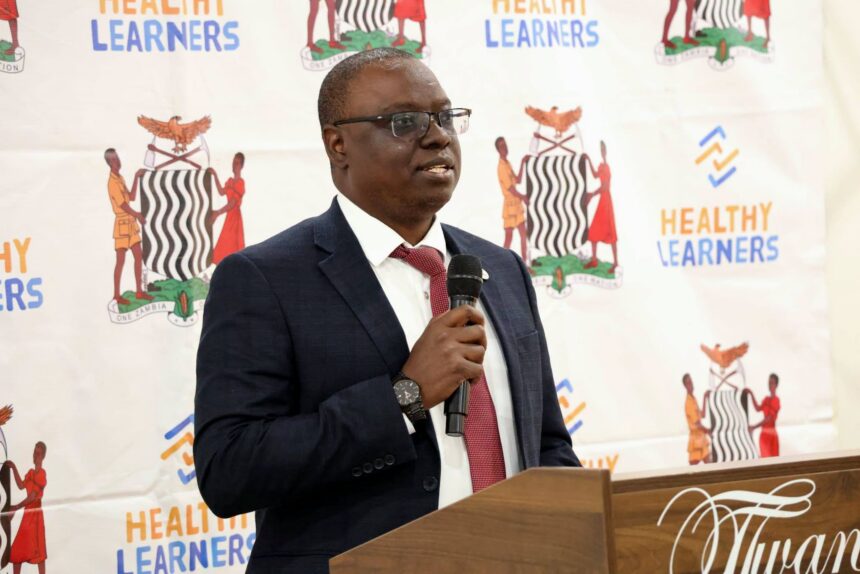
Speaking on behalf of the Head of the Presidential Delivery Unit, Ms. Kusobile Kamwambi, Delivery Manager for Enhanced Value Chains Mr. Jones Mulunga Shimbela emphasised the importance of building strong partnerships with the media. In her speech, Ms. Kamwambi described the media as a critical stakeholder in advancing the Zambia School Health Programme through accurate reporting and increased public awareness. She explained that greater media coverage would help generate public demand for quality school health services while strengthening accountability in programme implementation. According to the PDU, informed citizens are more likely to support initiatives that improve children’s health, education and overall wellbeing. Strengthening communication around the programme is therefore seen as an essential part of achieving long-term success.
Ms. Kamwambi also highlighted the important role the media plays in encouraging citizen engagement and promoting transparency. Through consistent reporting on programme achievements, challenges and opportunities, media organisations can help communities understand how school health services contribute to better educational outcomes. Increased public awareness can also encourage parents, teachers and local leaders to participate more actively in supporting school health initiatives. The Presidential Delivery Unit believes that strategic communication creates stronger public ownership of national programmes and helps ensure that investments deliver meaningful results. This partnership between government and the media reflects a broader commitment to improving service delivery through informed public participation.
Earlier in the meeting, Director of Human Resource and Administration Mr. Lazarous Mulenda represented the Permanent Secretary in the Ministry of Information and Media, Mr. Thabo Kawana. He reaffirmed the Government’s commitment to working closely with media organisations to improve public awareness of national development programmes. Mr. Mulenda noted that the media performs a vital function by informing citizens, shaping public discussion and supporting the successful implementation of government initiatives. He explained that effective communication helps people better understand public policies and encourages greater confidence in development programmes. The Ministry continues to recognise the media as a key partner in ensuring that important information reaches communities throughout Zambia.
The engagement also highlighted the multi-sectoral nature of the Zambia School Health Programme, with various government ministries contributing to its implementation. Representatives from the Ministry of Local Government and Rural Development explained the ministry’s central role in expanding the programme through local authorities across the country. Councils support implementation by facilitating land allocation, granting planning approvals, providing engineering supervision and assisting with infrastructure development for school health rooms. These responsibilities ensure that health facilities are properly integrated into school construction projects from the planning stage. Local government involvement demonstrates how coordinated action between different institutions strengthens public service delivery.
A major focus of the discussions was the use of the Constituency Development Fund, commonly known as the CDF, to support school health infrastructure. The Ministry explained that the CDF provides a sustainable financing mechanism for integrating standardised health rooms into newly constructed public schools. Every new public school built using CDF resources is now required to include a standardised health room as part of its infrastructure. This policy ensures that access to basic health services becomes a permanent feature of Zambia’s education system rather than an optional addition. By embedding health facilities within schools, the Government aims to improve learners’ wellbeing while supporting better educational outcomes.
The Zambia School Health Programme has already achieved significant progress, according to presentations delivered during the meeting. Programme data revealed that 1,062 health rooms have been established across all ten provinces and 45 districts. These facilities have helped extend healthcare services directly into schools, making treatment more accessible for children who may otherwise face barriers to receiving medical attention. Bringing health services closer to learners reduces absenteeism and enables children to receive timely care while remaining in school. The programme’s expansion reflects sustained investment in improving child health through practical and accessible solutions.
The programme’s impact extends beyond infrastructure, with more than 1.4 million learners already benefiting from school health services. Presentations also revealed that over 8,370 health teachers have received specialised training to support learners and promote healthier school environments. These trained educators play an important role in identifying health concerns, providing basic support and referring learners for additional care when necessary. In addition, the programme has facilitated treatment for more than 1.2 million sick children, demonstrating its contribution to improving children’s health across participating schools. These achievements highlight the value of integrating healthcare into the education system to support learner wellbeing and academic success.
Looking ahead, organisers outlined ambitious plans to expand the Zambia School Health Programme over the coming years. The vision is to extend the programme to 70 districts, reach 2,000 schools, train 15,000 health teachers and provide services to more than three million learners by 2028. Achieving these targets will require continued collaboration between government ministries, local authorities, development partners, educational institutions and the media. Expanding the programme will also strengthen efforts to ensure that every child has access to quality health services regardless of where they attend school. The long-term strategy reflects Zambia’s commitment to building healthier learning environments that support children’s physical wellbeing and educational achievement.
The two day Media Owners Engagement Meeting demonstrates the growing recognition that successful national programmes require effective communication alongside strong implementation. By bringing together media owners, government institutions and development partners, the meeting has created an opportunity to deepen understanding of the Zambia School Health Programme and reinforce the shared responsibility of improving children’s health. The discussions highlighted how coordinated action across multiple sectors can strengthen service delivery while increasing public confidence in government initiatives. As Zambia works towards expanding school health services to millions more learners, partnerships with the media will play an essential role in raising awareness, encouraging accountability and promoting community support. The engagement marks another important step in ensuring that quality healthcare becomes an integral part of every learner’s educational journey while contributing to a healthier and more productive future for the nation.