




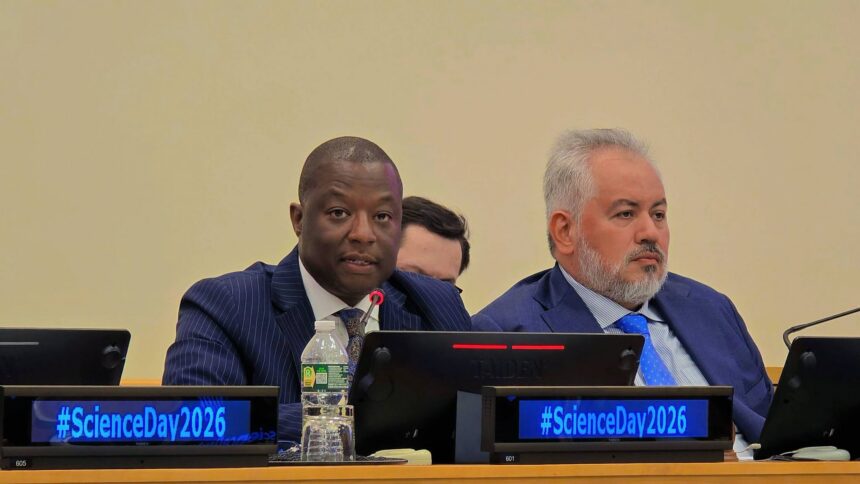
Zambia has reaffirmed its commitment to advancing science, technology and innovation as essential tools for achieving sustainable development during Science Day 2026, an important event held alongside the 2026 High-level Political Forum on Sustainable Development at the United Nations. Representing the country at the international gathering, Zambia’s Permanent Representative to the United Nations, Dr. Chola Milambo, highlighted the critical role that scientific research and innovation play in addressing global challenges. The event brought together policymakers, scientists, international organizations, young leaders and development partners to discuss how stronger cooperation between science and public policy can accelerate progress toward the Sustainable Development Goals. As the international community enters the final years leading to the 2030 deadline, countries are increasingly recognizing that evidence-based decision-making and technological advancement are essential for sustainable growth. Zambia’s participation demonstrated its determination to contribute to global efforts while strengthening its own national development agenda.
During his address, Dr. Milambo emphasized that developing countries must not remain passive consumers of technology but instead become active partners in scientific discovery and innovation. He explained that achieving this goal requires greater investment in research, education, digital infrastructure and international collaboration. By strengthening these areas, developing nations can create environments that encourage innovation, improve productivity and generate solutions tailored to local challenges. Investment in science and technology also supports economic growth by creating new industries, expanding employment opportunities and improving public services. Dr. Milambo’s message reinforced Zambia’s belief that inclusive scientific progress should empower every nation to contribute to global knowledge rather than depend solely on innovations developed elsewhere.
Dr. Milambo also reaffirmed Zambia’s commitment to promoting inclusive innovation through stronger multilateral cooperation. He stressed that scientific progress should benefit all countries and all people, regardless of their level of economic development. This approach aligns with the principles of the Sustainable Development Goals, which call for reducing inequalities while promoting shared prosperity and global partnerships. Zambia continues to support international cooperation that enables countries to exchange knowledge, strengthen research capacity and improve access to emerging technologies. Such collaboration allows nations to work together in addressing complex challenges such as climate change, food security, healthcare, education and digital transformation.
The discussions during Science Day 2026 also featured contributions from other international leaders, including Austria’s Permanent Representative to the United Nations, Ambassador Gregor W. Kössler, and Colombia’s Deputy Permanent Representative to the United Nations, Ambassador Raúl Sánchez. The speakers emphasized the growing importance of strengthening cooperation between scientists and policymakers to ensure that public decisions are informed by reliable evidence and research. They also highlighted the need for inclusive artificial intelligence, equitable access to scientific knowledge and technological innovation that reaches underserved communities around the world. Their contributions reflected a shared understanding that innovation should reduce inequalities rather than deepen existing social and economic gaps. These discussions demonstrated broad international support for ensuring that science serves humanity in an inclusive and responsible manner.
An important aspect of Zambia’s participation is its leadership role alongside Austria as co-chairs of the 2026 Science, Technology and Innovation Forum. This responsibility places Zambia at the center of international conversations on the future of scientific cooperation and sustainable development. Co-chairing the forum provides an opportunity for the country to contribute to shaping global priorities related to innovation, research and technology-driven development. It also strengthens Zambia’s international profile by demonstrating its willingness to engage constructively in multilateral processes that seek practical solutions to shared global challenges. Such leadership reflects the country’s growing recognition as an active participant in international discussions on science and sustainable development.
Science Day 2026 brought together policymakers, scientific leaders, United Nations agencies, youth representatives and a wide range of stakeholders to explore how stronger science-policy cooperation can accelerate implementation of the Sustainable Development Goals. Participants examined the institutional reforms, partnerships and innovative approaches needed not only to meet the 2030 targets but also to sustain progress beyond that milestone. The discussions acknowledged that the world continues to face significant challenges, including climate change, economic uncertainty, technological inequality and public health threats, all of which require coordinated scientific responses. Zambia’s active participation and leadership at the event underscored its commitment to ensuring that science, technology and innovation remain central to national and global development strategies. By advocating for greater investment, stronger international cooperation and inclusive access to scientific knowledge, Zambia continues to position itself as a committed partner in building a more sustainable, innovative and equitable future for all.