







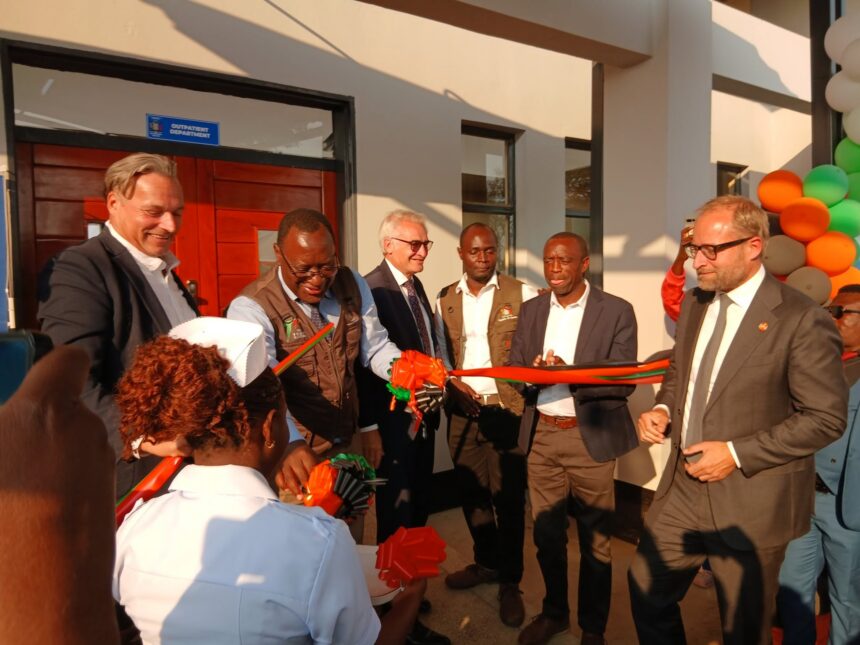
UNFPA Zambia has joined the Government of Zambia, the Ministry of Health, Bayer Zambia, Muunga Community and other partners in celebrating a major milestone in healthcare development through the commissioning of the Caleb Esnart Munzele Level 1 Hospital and the ground-breaking of its Level 2 Maternity Annex. The event represents a significant step towards improving access to quality healthcare services, particularly for women, adolescents and young people in Central Province. The initiative demonstrates the impact that can be achieved when government leadership, private sector investment and technical expertise come together to address critical health needs. Through this partnership, communities are expected to benefit from improved medical services, stronger reproductive health support and enhanced maternal care. The project highlights the importance of collaborative approaches in building sustainable healthcare systems that respond to the needs of communities.
The Caleb Esnart Munzele Level 1 Hospital project reflects a strong partnership model involving different organisations with clearly defined roles. The Government of Zambia, through the Ministry of Health, is providing national leadership, coordination and oversight to ensure that the healthcare development aligns with national priorities. Bayer Zambia has contributed by funding the physical infrastructure, helping to expand healthcare facilities and improve access to essential services. UNFPA Zambia is supporting the initiative by providing critical clinical equipment and strengthening healthcare capacity through the training of midwives in Long Acting Reversible Contraceptives, commonly known as LARC services. This combined approach brings together resources, expertise and commitment from multiple partners to create a healthcare facility capable of delivering meaningful benefits to the community.
The development of the Level 2 Maternity Annex is expected to further strengthen maternal and reproductive healthcare services in the area. Maternity facilities play an important role in ensuring that women receive safe and timely care before, during and after childbirth. Improved maternity infrastructure can help reduce health risks associated with pregnancy and delivery while increasing access to professional medical support. The expansion will also provide healthcare workers with better facilities to support mothers, newborns and families. By investing in stronger maternity services, the partnership aims to contribute to improved health outcomes and greater protection for women and children.
UNFPA Zambia’s involvement in the project focuses on protecting and advancing women’s and adolescents’ reproductive health. Access to quality reproductive healthcare services allows individuals to make informed decisions about their health, education and future opportunities. The training of midwives in Long Acting Reversible Contraceptives will strengthen the ability of healthcare providers to offer a wider range of family planning services. These services are important in helping women and adolescents access safe, reliable and voluntary reproductive health options. Strengthening healthcare workers’ skills ensures that communities receive professional support from trained providers who understand their needs.
The partnership also recognises the wider social and economic benefits of investing in reproductive health. When adolescents and young people have access to appropriate healthcare services, they are better positioned to remain in school, develop skills and participate in the workforce. Protecting reproductive health contributes to improved educational outcomes, stronger household stability and increased economic opportunities. Healthy communities are better able to contribute to national development because individuals can pursue their goals with fewer barriers. The investment in healthcare infrastructure and services therefore extends beyond medical care by supporting broader social progress.
The commissioning of the Caleb Esnart Munzele Level 1 Hospital and the development of the maternity annex demonstrate the value of partnerships in addressing healthcare challenges. Government institutions, private sector organisations and development partners each bring important contributions that strengthen the effectiveness and sustainability of such projects. By combining infrastructure investment with clinical training and equipment support, the initiative addresses both physical and human resource needs within the healthcare system. This approach helps ensure that facilities are not only built but are also equipped with the capacity needed to provide quality services. The collaboration provides an example of how coordinated action can improve healthcare access and outcomes.
The initiative also supports Zambia’s broader efforts to strengthen maternal health, reproductive health services and community healthcare delivery. Expanding healthcare infrastructure in underserved areas helps reduce barriers that prevent people from accessing essential services. The involvement of local communities, including Muunga Community, highlights the importance of ensuring that development projects respond to the needs of the people they are intended to serve. Community-focused healthcare initiatives are more likely to create lasting benefits when local stakeholders are included in the process. The partnership’s commitment to improving health services reflects a shared vision of healthier and more empowered communities.
The commissioning of the Caleb Esnart Munzele Level 1 Hospital and the ground-breaking of its Level 2 Maternity Annex mark an important achievement for healthcare development in Central Province and Zambia as a whole. Through the combined efforts of the Government of Zambia, Bayer Zambia, UNFPA Zambia, Muunga Community and other partners, the project is creating new opportunities for improved healthcare access and stronger reproductive health services. The initiative shows how leadership, investment and technical expertise can work together to address important community needs. By supporting women’s and adolescents’ health, the partnership is helping create conditions that allow young people to remain in school, enter the workforce and contribute to Zambia’s economic future. This investment represents a commitment to building healthier communities and a stronger healthcare system for generations to come.