






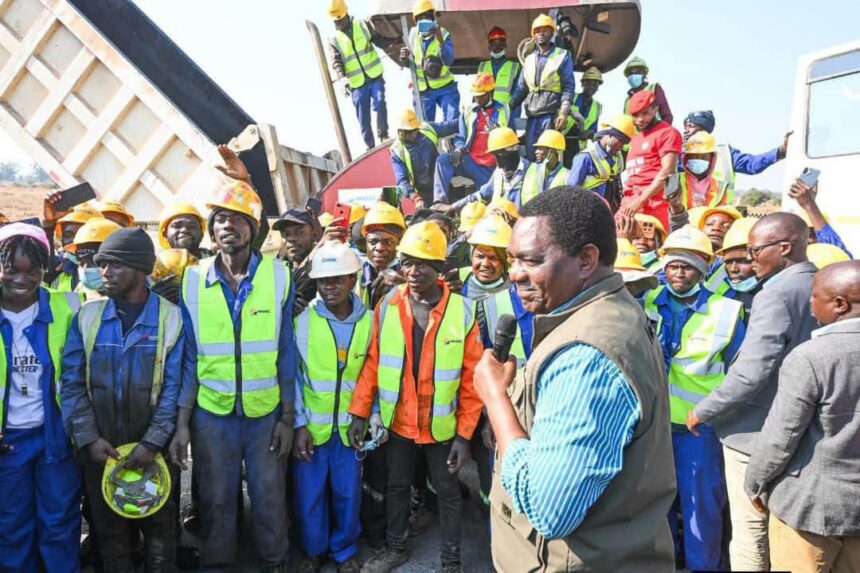
President Hakainde Hichilema has reaffirmed the Zambian Government’s commitment to accelerating infrastructure development after conducting an inspection of the Lusaka–Ndola Dual Carriageway Project and engaging with citizens along the route. The visit formed part of the Government’s ongoing efforts to monitor the progress of strategic national infrastructure projects that are expected to improve connectivity, stimulate economic growth and enhance road safety across the country. During the engagement, the President outlined several important developments related to the project, including significant cost savings, new road construction plans and measures aimed at supporting local communities. He also addressed issues affecting agriculture and employment while responding directly to concerns raised by members of the public. The inspection demonstrated the Government’s intention to ensure that major infrastructure investments deliver long term benefits for both the economy and ordinary citizens.
One of the most significant announcements made during the inspection was the decision to upgrade the Landless Corner to Mumbwa Road to bituminous standard. The President explained that this important road project would improve transport links between communities while supporting economic activities in the region. Better roads are expected to reduce travel times, improve access to markets and make it easier for businesses to move goods and services across different parts of the country. Improved infrastructure also has the potential to attract new investment and create opportunities for growth in sectors such as agriculture, mining, tourism and trade. By prioritising this road upgrade, the Government aims to strengthen regional connectivity while improving the quality of life for people who rely on the route for their daily activities.
President Hichilema also revealed that the Government had secured savings of approximately 550 million United States Dollars through the restructuring of the Lusaka–Ndola Dual Carriageway Project. He explained that the project had originally been estimated to cost more than 1 billion United States Dollars but was successfully restructured under a Public Private Partnership framework at a total cost of 650 million United States Dollars. According to the President, this achievement reflects the Government’s commitment to responsible financial management while ensuring that critical infrastructure projects continue to move forward. The revised financing arrangement places the responsibility for financing the project on concession partners instead of placing the immediate financial burden on the national treasury. This approach allows Zambia to continue investing in essential infrastructure while protecting public resources and creating room for investment in other national priorities.
The Public Private Partnership model adopted for the Lusaka–Ndola Dual Carriageway Project represents an important shift in how major infrastructure projects are financed in Zambia. By working with private sector partners, the Government aims to deliver large scale projects more efficiently while reducing pressure on public finances. The revised structure is expected to accelerate project implementation without compromising the country’s fiscal sustainability. Infrastructure experts often view well managed public private partnerships as an effective way to mobilise investment, improve project delivery and encourage innovation in construction and maintenance. The Lusaka–Ndola Dual Carriageway is regarded as one of Zambia’s most important transport corridors because it connects major commercial centres and supports both domestic and regional trade.
During his engagement with local communities, President Hichilema emphasised that the upgrading of the Landless Corner to Mumbwa Road would create employment opportunities for local residents during the construction phase. He stated that giving priority to local workers would help strengthen community livelihoods while ensuring that the benefits of infrastructure development are shared with the people living in the project area. Construction projects of this scale often generate employment in areas such as engineering, transport, construction, security and support services. Increased economic activity during construction can also benefit local businesses by creating demand for goods and services. The President’s commitment to local employment reflects the Government’s broader objective of ensuring that national development projects contribute directly to improving household incomes and reducing unemployment.
In addition to discussing infrastructure development, the President made an announcement that was warmly received by many members of the public. He directed that four volunteer nurses who were present during the community engagement should be recruited into the civil service. This decision highlighted the Government’s recognition of the important contribution made by volunteer health workers who continue to provide services despite limited employment opportunities. Recruiting additional nurses into the public health system is expected to strengthen healthcare delivery while improving access to essential medical services in communities that require greater support. The announcement also demonstrated the President’s willingness to respond directly to issues affecting citizens during public engagements.
Agriculture also featured prominently during the President’s address, reflecting the sector’s importance to Zambia’s economy and food security. President Hichilema announced that maize buying depots would soon begin operations as part of the Government’s preparations for the crop marketing season. He explained that measures had already been put in place to facilitate timely payments to farmers in order to improve the efficiency of the marketing process. Prompt payments are considered essential for helping farmers meet production costs, invest in future farming activities and support their families. The Government hopes that improvements in the crop marketing system will strengthen confidence among farmers while contributing to increased agricultural productivity across the country.
The Lusaka–Ndola Dual Carriageway Project remains one of Zambia’s most significant infrastructure investments because of its expected impact on transport, trade and economic development. Once completed, the upgraded highway is expected to improve road safety, reduce travel times and enhance the movement of goods and passengers between Lusaka, Ndola and other key economic centres. Better transport infrastructure is also expected to support regional integration by strengthening trade links with neighbouring countries that rely on Zambia’s road network. Modern highways play an important role in reducing transport costs, improving logistics efficiency and supporting industrial growth. The Government continues to view infrastructure investment as a key driver of national development and long term economic competitiveness.
President Hakainde Hichilema’s inspection of the Lusaka–Ndola Dual Carriageway Project demonstrated the Government’s continued focus on delivering infrastructure that supports economic growth, creates jobs and improves public services. The announcements regarding cost savings, the Landless Corner to Mumbwa Road upgrade, employment opportunities, healthcare recruitment and improved agricultural marketing reflect a broader strategy aimed at promoting sustainable development across multiple sectors. By restructuring the project through a Public Private Partnership, the Government has also shown its intention to balance infrastructure expansion with responsible financial management. These initiatives are expected to strengthen connectivity, improve service delivery and create new opportunities for businesses and communities throughout Zambia. As implementation continues, the Lusaka–Ndola Dual Carriageway Project is expected to remain a cornerstone of the country’s efforts to build a stronger, more connected and economically resilient future.