






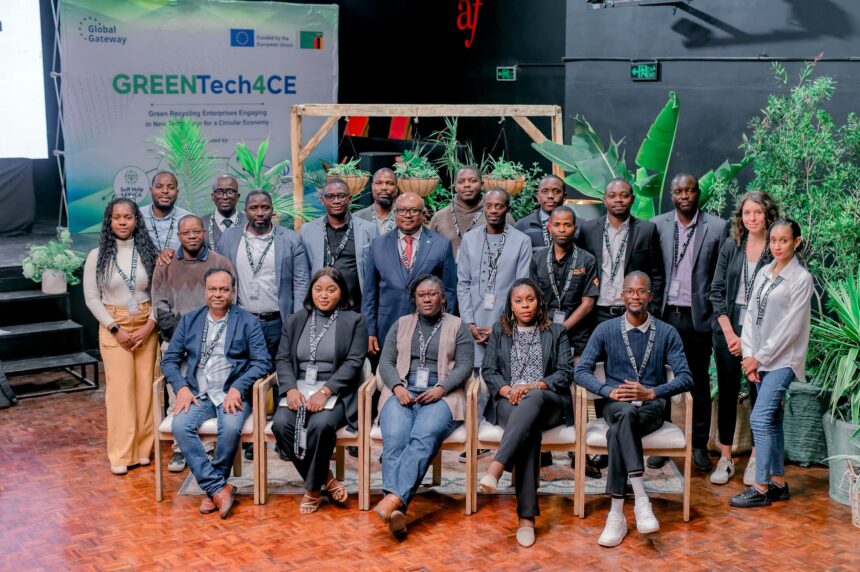
The transition to a circular economy is becoming increasingly important as countries across Africa seek sustainable solutions to growing environmental challenges while creating new economic opportunities. One of the most pressing issues is the rapid increase in electronic waste and the growing number of used lithium-ion batteries generated by off-grid solar systems, electric mobility, consumer electronics, and renewable energy technologies. Recognising both the environmental risks and the economic potential of these materials, the European Union SWITCH-2-CE in East and Southern Africa (ESA) recently participated in the Circular Zambia: Electronics and Urban Mining Workshop held at Alliance Française Lusaka. The event brought together policymakers, technical experts, development organisations, private sector representatives, and government officials to discuss practical solutions for managing electronic waste while unlocking new industries. The workshop demonstrated that Zambia is well positioned to become a regional leader in circular electronics and sustainable battery value chains.
Hosted by the GreenTech4CE Zambia Project, the workshop focused on one critical question that is becoming increasingly relevant across Africa. How can electronic waste and used lithium-ion batteries be transformed from environmental liabilities into valuable economic resources? Rather than viewing discarded batteries and electronics as waste, participants explored strategies for recovering valuable materials, extending product lifecycles, creating skilled jobs, and supporting sustainable economic growth. This shift in thinking reflects the broader principles of the circular economy, where products and materials remain in productive use for as long as possible before being recovered and reintroduced into manufacturing. By embracing these principles, countries such as Zambia can reduce pollution, strengthen local industries, and improve resource efficiency.
During the workshop, the European Union SWITCH-2-CE in ESA shared valuable insights from its ongoing work on lithium-ion battery circularity throughout East and Southern Africa. Experts explained how better battery management can significantly extend product life while reducing waste and lowering costs for businesses and consumers. The discussions highlighted practical approaches that are already proving successful in different markets and can be adapted for Zambia’s growing renewable energy and electric mobility sectors. Instead of relying solely on importing new batteries, countries can build local industries around maintaining, repairing, testing, and repurposing existing battery systems. These approaches not only reduce environmental impacts but also generate new employment opportunities across multiple sectors.
One of the primary strategies presented was battery repair, which focuses on extending the useful life of battery systems that still have significant remaining capacity. Rather than replacing an entire battery pack when one component fails, technicians can identify faulty cells or modules and restore the battery to safe operating conditions. This process reduces costs for consumers while minimising waste entering landfills. Battery repair also supports businesses that rely heavily on energy storage systems by helping them maintain operations without frequent expensive replacements. As renewable energy installations continue expanding across Africa, repair services are expected to become an increasingly important part of the regional energy economy.
The workshop also highlighted battery reuse as another critical component of the circular economy. Many lithium-ion batteries removed from electric vehicles or solar installations may no longer meet their original performance requirements but still retain enough capacity for less demanding applications. These batteries can be safely tested and repurposed for second-life uses such as stationary energy storage systems that support homes, businesses, schools, and healthcare facilities. Reusing batteries delays recycling while extracting additional value from existing resources. This approach makes renewable energy systems more affordable and helps expand access to reliable electricity in communities that depend on off-grid power solutions.
Another important concept discussed during the event was remanufacturing, a process that rebuilds battery packs using carefully tested and certified battery modules. Instead of discarding entire battery systems, technicians inspect individual modules, remove damaged components, and assemble high-quality replacement packs that meet safety and performance standards. Remanufacturing significantly reduces the demand for newly mined raw materials while lowering manufacturing costs. It also creates opportunities for specialised technical skills, advanced manufacturing facilities, and local entrepreneurship. As battery demand continues to grow across East and Southern Africa, remanufacturing has the potential to become a major industrial sector supporting both clean energy and electric transportation.
Recycling remains an essential part of the battery circularity process, particularly when batteries have reached the end of their usable life. Workshop participants explored technologies that recover valuable raw materials such as lithium, cobalt, nickel, copper, and other critical minerals without compromising material quality. Recovering these resources reduces dependence on new mining operations while supporting more sustainable manufacturing practices. Effective recycling also prevents hazardous materials from contaminating soil and water, protecting both public health and the environment. Establishing strong recycling infrastructure will become increasingly important as larger volumes of lithium-ion batteries enter the waste stream over the coming years.
Beyond technical solutions, the European Union SWITCH-2-CE in ESA showcased several promising business models that are already emerging across the region. E-waste recycling companies are developing systems to safely collect, dismantle, and recover valuable materials from discarded electronics. Businesses specialising in lithium-ion battery testing and diagnostics are helping determine whether batteries should be repaired, reused, remanufactured, or recycled. Entrepreneurs are creating refurbished solar battery systems that provide affordable energy storage solutions for households and businesses. Another rapidly growing model is Battery-as-a-Service for electric mobility, allowing customers to access battery power through subscription or leasing arrangements instead of purchasing batteries outright, making electric transport more affordable while ensuring proper battery management throughout its lifecycle.
These business opportunities are becoming increasingly important as East and Southern Africa experience rapid growth in renewable energy adoption and electric mobility. Off-grid solar systems continue expanding across rural and urban communities, while governments and private companies are investing in electric vehicles, motorcycles, buses, and energy storage infrastructure. As more lithium-ion batteries enter the market, the region faces a unique opportunity to establish complete battery value chains before large volumes of batteries reach end-of-life. Developing these industries now will help ensure that valuable materials remain within local economies instead of becoming environmental hazards or being exported without adding local value. Early investment can position countries such as Zambia as regional leaders in sustainable battery management and circular manufacturing.
A major announcement during the workshop was the upcoming development of a Lithium-Ion Battery Circularity Training programme by the European Union SWITCH-2-CE in ESA in partnership with TEVETA Zambia. The programme aims to combine flexible online learning with practical hands-on training covering battery repair, reuse, remanufacturing, and related technical skills. Participants will gain practical experience while learning internationally recognised safety procedures and industry best practices. Importantly, the programme is being designed with a pathway towards TEVETA Skills Award accreditation, providing learners with recognised qualifications that can improve employment prospects and support entrepreneurship. Building a skilled workforce is essential for creating a sustainable circular battery industry that meets international quality and safety standards.
The success of the Circular Zambia: Electronics and Urban Mining Workshop reflects the importance of collaboration between governments, development partners, educational institutions, businesses, and technical experts. The organisers, including GreenTech4CE, Tandem Consulting, Self Help Africa, the European Union Delegation to Zambia, and numerous participating organisations, created an important platform for knowledge sharing and practical collaboration. Such partnerships are essential because building a circular economy requires coordinated action across multiple sectors rather than isolated projects. By bringing together diverse stakeholders, the workshop encouraged innovative thinking while identifying practical solutions that can be implemented in Zambia and replicated across the wider region. The conversations initiated during the event are expected to influence future investments, policy development, technical training, and industry growth.
The workshop delivered a clear message that East and Southern Africa stands at a pivotal moment in its clean energy transition. As demand for lithium-ion batteries continues to increase through solar power systems, electric mobility, and modern electronic devices, countries have a limited window to establish battery value chains that are environmentally responsible, economically competitive, and socially inclusive. The European Union SWITCH-2-CE in ESA’s participation highlighted practical strategies that transform waste into valuable resources while creating skilled jobs and supporting sustainable development. Through continued investment in innovation, technical training, recycling infrastructure, and regional partnerships, Zambia has the opportunity to become a leading example of circular electronics in Africa. The next chapter for sustainable battery management has already begun, and the foundations laid during this workshop will help shape a cleaner, more resilient, and more prosperous future for the region.