






The Zambian Government has taken another major step in its digital transformation agenda by officially on-boarding eight Local Authorities onto the Government Service Bus (GSB), a 24-hour digital operational platform designed to improve public service delivery. The latest development forms part of the ongoing e-Council Digitisation Project, which aims to make local government services more accessible, efficient and transparent for citizens across the country. Through the Government Service Bus, residents and businesses can now access a wide range of council services online without the need to visit council offices in person. This initiative reflects the Government’s commitment to embracing digital technology to simplify public administration while improving convenience for service users. It also supports Zambia’s broader goal of building a modern and technology-driven public sector.
The eight Local Authorities included in this latest phase of the digital migration are Lusaka, Ndola, Kitwe, Solwezi, Chingola, Kalulushi, Kalumbila and Chilanga. Their inclusion significantly expands the availability of digital municipal services through ZamPortal, an initiative being implemented in collaboration with the Smart Zambia Institute. The successful integration of these councils demonstrates the steady progress being made in transforming the way local government interacts with citizens. By bringing more councils onto a unified digital platform, the Government is creating greater consistency in service delivery across different parts of the country. The expansion also lays the foundation for future digital integration involving all local authorities nationwide.
Residents and businesses within the participating local authorities can now conveniently access several high-priority services through the online platform. These services include applications and electronic payments for health permits, fire safety certificates, property rates, business levies, market fees, bus station fees, billboard permits and banner permits. The availability of these services online reduces the need for physical visits to council offices, saving both time and travel costs for users. Digital payments also offer greater flexibility by allowing transactions to be completed securely at any time of the day. This 24-hour accessibility makes local government services more responsive to the needs of modern citizens and businesses.
The latest milestone follows the successful launch of Lusaka City Council’s digital services in May this year. Building on that achievement, the Ministry of Local Government and Rural Development proceeded to on-board seven additional Local Authorities, increasing the total number of digitally connected councils to eight. This phased implementation approach allows the Government to strengthen the system while ensuring that each participating council successfully adopts the new digital platform. Lessons learned from the initial rollout can also be applied to future implementations, improving efficiency as additional councils join the programme. The steady expansion reflects careful planning and a commitment to long-term digital transformation.
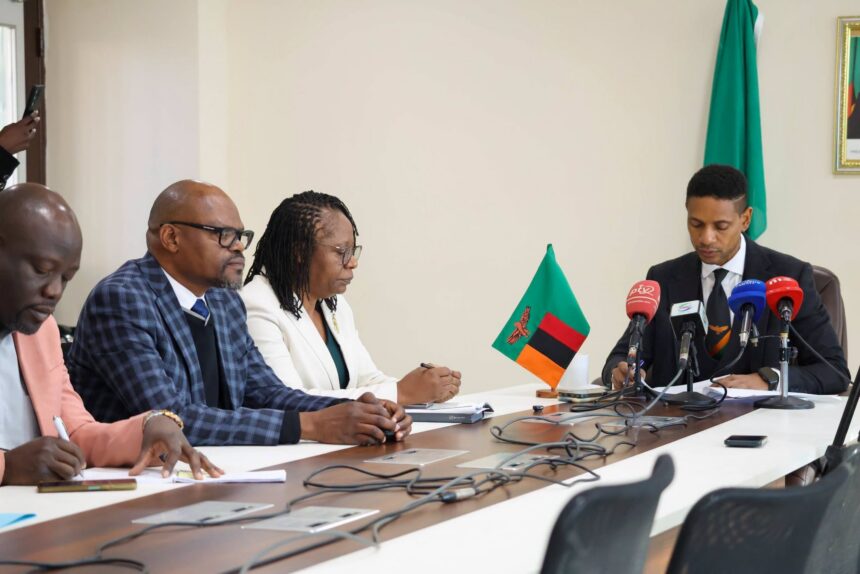
Speaking during a press briefing, Permanent Secretary for Administration Dr. Gabriel Pollen explained that the digital migration forms part of the Government’s broader strategy to improve service delivery and operational efficiency. He noted that the Government Service Bus provides citizens with a secure, reliable and convenient way to interact with their local authorities. Digital platforms simplify many administrative processes while reducing paperwork and manual procedures that often delay service delivery. The introduction of online services also helps improve accountability by creating digital records of transactions and reducing opportunities for errors. These improvements contribute to a more efficient and transparent local government system.
Dr. Pollen praised the digital initiative as an important milestone in modernising municipal services throughout Zambia. He explained that replacing manual, cash-based transactions with secure electronic payment systems helps eliminate many of the inefficiencies traditionally associated with local government operations. Digital transactions reduce processing times while improving financial accountability and record management. The use of technology also strengthens revenue collection by providing more accurate and transparent payment systems. As councils continue adopting digital platforms, both government institutions and citizens stand to benefit from faster and more reliable services.
The Permanent Secretary encouraged residents and business operators within the participating local authorities to take full advantage of the new digital payment platforms. By using the online services, citizens can complete transactions more conveniently while avoiding long queues and unnecessary administrative delays. Businesses also benefit from quicker processing of permits, licences and other council-related services that are essential for daily operations. Dr. Pollen noted that the participating local authorities have already recorded encouraging improvements in revenue collection following the introduction of digital services. This positive trend demonstrates how technology can strengthen both public service delivery and financial sustainability within local government.
Dr. Pollen further announced that, following the successful on-boarding of the eight Local Authorities, the Ministry of Local Government and Rural Development, working together with the Smart Zambia Institute, plans to officially launch the e-Council services by the end of the month. The official launch will mark another important milestone in Zambia’s digital transformation journey. It will also provide an opportunity to showcase the capabilities of the platform while encouraging wider public participation. Successful implementation depends not only on technology but also on public awareness and user confidence. For this reason, the Government is placing significant emphasis on community engagement throughout the rollout process.
As part of preparations for the official launch, Dr. Pollen instructed all participating Local Authorities to intensify public awareness campaigns within their communities. He also directed councils to establish customer help desks that will assist residents and businesses in accessing the new digital services. These support centres will help users understand how to navigate the online platform while addressing any technical or administrative challenges they may encounter. Providing accessible customer support is expected to increase public confidence in the system and encourage greater adoption of digital services. Education and assistance remain essential components of any successful digital transformation programme.
The Government has reaffirmed its long-term commitment to working closely with the Smart Zambia Institute and other stakeholders to ensure that all 116 Local Authorities across Zambia are successfully digitised. Achieving nationwide digital integration will create a more responsive, transparent and service-oriented local government system capable of meeting the evolving needs of citizens and businesses. The successful on-boarding of the first eight Local Authorities represents a strong foundation for the wider implementation of the e-Council Digitisation Project. As additional councils join the Government Service Bus, more Zambians will gain access to faster, more secure and more convenient public services. This continued investment in digital governance demonstrates the Government’s determination to modernise public administration while improving efficiency, accountability and the overall quality of local government service delivery.