







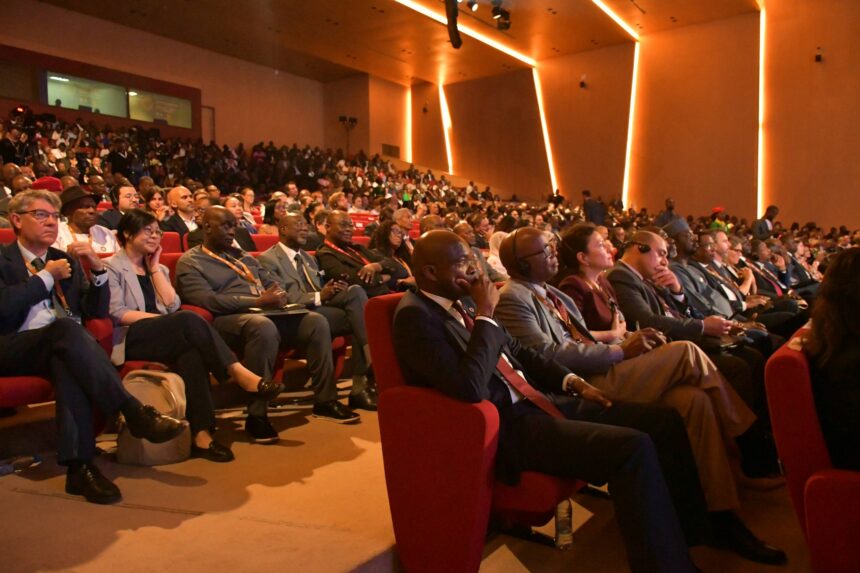
Zambia ended its participation at the 2026 Annual Meetings of the African Development Bank Group with a strengthened sense of economic direction and investor confidence. The meetings focused on financing development in a challenging global environment where capital flows remain tight and infrastructure needs continue to grow. The Zambian delegation presented the country as stable, reform-driven, and focused on long term transformation. It also highlighted progress in fiscal management, debt restructuring, and macroeconomic stabilization. These factors positioned Zambia as an emerging destination for investment in Africa’s changing financial landscape.
The theme of the meetings, “Mobilizing Africa’s Development Financing at Scale in a Fragmented World,” shaped discussions across all sessions. African finance leaders, central bank governors, development institutions, and private investors explored ways to unlock capital for growth and resilience. The conversations emphasized the need for stronger domestic resource mobilization and deeper private sector participation. They also focused on building regional value chains and improving infrastructure connectivity across borders. Zambia aligned its message with these priorities and reinforced its commitment to structural reform and economic diversification within Zambia.
The delegation was led by Secretary to the Treasury Felix Nkulukusa, who used the platform to strengthen partnerships with development finance institutions and investors. He emphasized Zambia’s reform momentum and the country’s readiness to attract productive investment. The delegation also included senior officials such as Mulele Maketo Mulele, Dr Francis Chipimo, Dr Jonathan Chipili and George Moonga, each contributing to technical and diplomatic engagements. Their discussions covered infrastructure financing, monetary stability, and regional integration. The group presented Zambia as a coordinated and policy-consistent economy focused on long term growth.
Nkulukusa stated that Zambia would continue using recent economic gains to deepen investment inflows and expand productive sectors. He pointed to improvements in debt restructuring, inflation control, and fiscal discipline as key drivers of renewed confidence. He also emphasized that government strategy now focuses on strengthening infrastructure, mining, agriculture, energy, and manufacturing. These sectors are expected to drive job creation and export growth. His message reinforced Zambia’s ambition to shift toward a production-based economy supported by private capital.
A key moment during the meetings came when former Finance Minister Situmbeko Musokotwane received the 2026 African Finance Minister of the Year award at the African Banker Awards. The recognition highlighted Zambia’s reform progress and macroeconomic recovery efforts. Sid Ould Tah praised Musokotwane’s leadership and described Zambia’s reforms as critical in stabilizing the economy during a difficult adjustment period. The award drew continental attention to Zambia’s financial reforms and policy direction. It also reinforced confidence in the country’s economic management framework.
Musokotwane said the recognition reflected collective national effort rather than individual achievement. He credited institutional discipline, policy consistency, and public sector commitment for the progress made. He also acknowledged the leadership of Hakainde Hichilema, highlighting his administration’s focus on transparency and fiscal discipline. He encouraged African economies to move beyond stabilization toward industrial growth and job creation. His remarks aligned with broader calls for Africa to retain more value within its economies through production and investment.
The meetings also highlighted major infrastructure and energy priorities across the continent. Zambia pointed to opportunities linked to regional projects such as transport corridors, energy interconnections, and mineral value chains. Initiatives like the Lobito Corridor and cross-border power projects were identified as key growth enablers. The country also supported Mission 300, a joint initiative aimed at expanding electricity access across Africa. These developments are seen as essential for industrial expansion, digital transformation, and long term economic resilience.
Agriculture also featured strongly in Zambia’s engagements, particularly through discussions on IFAD14 and rural development financing. The country reaffirmed its focus on smallholder farmers, climate resilience, and improved market access. It also highlighted the US$50 million Financial Inclusion for Resilience and Innovation Project as part of its broader agricultural transformation agenda. The project is designed to improve productivity and strengthen rural livelihoods. Zambia’s position emphasized inclusive growth and stronger integration of rural communities into the national economy.
Zambia also provided updates on its development partnership portfolio with the African Development Bank, valued at about US$905.8 million across 24 projects. These projects span transport, energy, agriculture, water systems and financial sector reforms. Major initiatives include infrastructure upgrades, climate adaptation programmes and regional trade corridors. The delegation stressed the importance of governance reforms, transparency and accountability in sustaining investor trust. Overall, Zambia left the meetings projecting a clear path of reform continuity, investment attraction and long term economic transformation aimed at stronger regional and global competitiveness.