






The Government has taken a major step toward modernising agriculture and strengthening climate resilience through the official handover of agricultural mechanisation equipment procured by Kalumbila Town Council at a cost of K6,361,020.00. The investment was fully financed using locally generated revenue, particularly property rates, marking a significant milestone in decentralised development and community-led decision making. The initiative directly targets more than 19,000 farmers across six wards, aiming to improve productivity and reduce the labour demands that have long constrained rural agriculture. The programme reflects a broader national push to shift farming from subsistence methods toward mechanised and commercially viable production systems. It also demonstrates how local authorities can play a central role in driving economic transformation when given fiscal autonomy and responsibility.
The equipment package includes six 4×4 tractors accompanied by essential farming implements such as four-row planters, 16-disc harrows, three-disc ploughs and five-ton tipping trailers. These tools are designed to support the full agricultural cycle from land preparation to planting and harvesting. By introducing mechanised solutions, farmers in Kalumbila are expected to significantly increase the amount of land cultivated per season. This shift is particularly important in a district that benefits from favourable rainfall patterns, which can be fully utilised only when adequate farming inputs are available. The intervention is expected to improve efficiency, reduce manual labour and increase overall yields across participating wards.
The procurement process was driven through Ward Development Funds, with the 2026 budget allocating K4 million to each ward for local development initiatives. The six Ward Development Committees collectively agreed to prioritise agriculture mechanisation as a strategic investment to empower their communities. This decision reflects a growing understanding at local level that agriculture remains the backbone of rural livelihoods and a key driver of economic stability. By directing funds toward productive assets rather than short-term consumption projects, the wards have positioned themselves for long term gains in food security and income generation. The use of locally generated resources also highlights improved fiscal discipline and community ownership of development priorities.
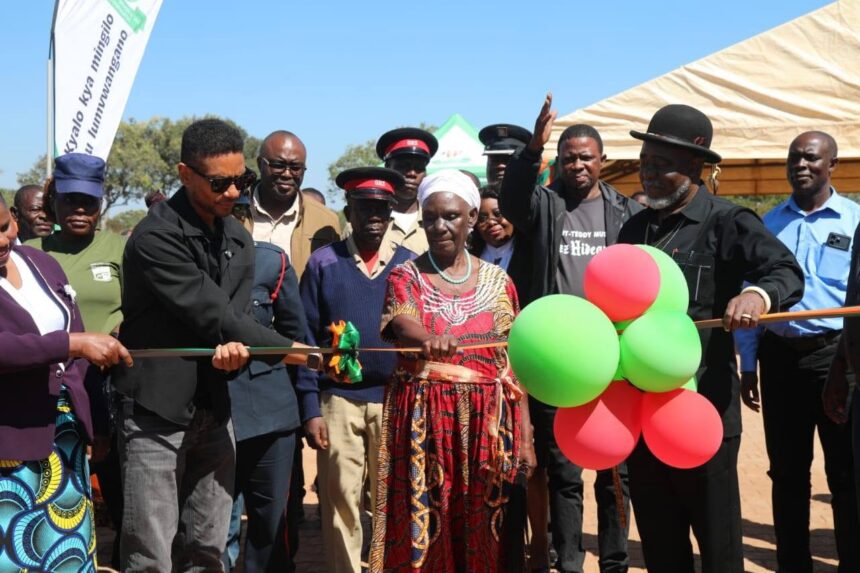
During the official handover ceremony, Ministry of Local Government and Rural Development Permanent Secretary for Administration, Dr Gabriel Pollen, led proceedings and emphasized the transformative potential of the investment. He noted that Kalumbila is well positioned to experience significant agricultural growth due to its favourable rainfall patterns and expanding farming communities. He further stated that the initiative aligns with the national agenda set by President Hakainde Hichilema, which prioritises agricultural mechanisation as a pathway to increased productivity, food security and wealth creation. Dr Pollen stressed that modern farming equipment will help reduce the physical burden on farmers while improving efficiency across the entire agricultural value chain. He also highlighted that such investments strengthen rural economies by enabling farmers to produce more with fewer resources.
Dr Pollen further explained that mechanisation plays a critical role in helping rural communities adapt to climate change and environmental shocks. He pointed out that unpredictable weather patterns require farmers to adopt more resilient and efficient farming systems. By introducing modern equipment, Kalumbila Town Council is helping ensure that agricultural activities remain stable even under changing climatic conditions. He added that improved productivity will not only benefit individual households but also contribute to national food security goals. The investment therefore serves both local and national development interests by strengthening the agricultural base of the district.
Speaking on behalf of the local community, His Royal Highness Chief Mumena commended the local authority for its commitment to decentralised development and sustainable rural investment. He praised the decision to channel resources into agriculture, describing it as a practical approach to improving livelihoods and reducing poverty in rural areas. He also noted that the involvement of traditional leadership and community structures in decision making has strengthened trust and accountability in development planning. The chief highlighted that such initiatives demonstrate how collaboration between government, local authorities and traditional leadership can produce meaningful results. His remarks reflected strong community support for the project and its long term impact on rural development.
The handover of agricultural mechanisation equipment in Kalumbila represents a significant step in Zambia’s broader development agenda focused on empowering local communities and improving productivity. It shows how decentralised funding models can be effectively used to address real economic challenges at grassroots level. By investing in modern farming tools, Kalumbila Town Council has set a practical example of how local resources can be transformed into long term development assets. The initiative is expected to enhance food production, create economic opportunities and strengthen resilience against climate-related risks. It also reinforces the importance of aligning local development priorities with national agricultural transformation goals for sustainable growth.