







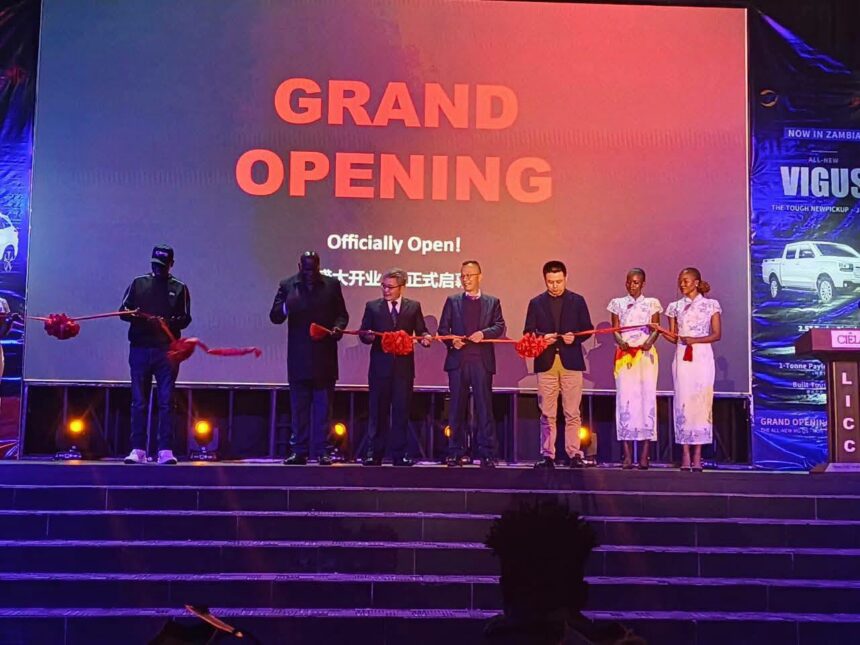
Government has reaffirmed its commitment to advancing Zambia’s automotive industry through strategic partnerships that aim to boost industrialisation, innovation and sustainable transport solutions. This commitment was highlighted during the launch of new JMC and MG vehicle models and the official opening of the TIM MOTORS showroom in Lusaka, an event that brought together government officials, industry leaders and private sector partners. The occasion marked a key milestone in Zambia’s efforts to modernise its transport and manufacturing sectors through international cooperation. It also demonstrated growing confidence in the country’s investment climate and industrial policy direction. The event placed strong emphasis on collaboration between Zambia and China as a driver of long-term economic development.
Permanent Secretary for Special Duties at Cabinet Office, Mr. Kennedy Kalunga, officiated at the launch and underscored the importance of the investment in supporting Zambia’s broader industrial development agenda. He noted that the introduction of new JMC and MG models reflects the strong and enduring partnership between Zambia and China. He further highlighted that such investments contribute directly to job creation and technology transfer within the local economy. Mr. Kalunga also pointed to advancements in automotive technology as a key opportunity for Zambia to modernise its transport systems. He emphasized the need to embrace environmentally sustainable solutions while expanding access to reliable vehicles across different sectors.
During the event, government officials recalled the long-standing performance of JMC and MG vehicles in Zambia, particularly the JMC pickup trucks and MG6 sedans donated by the Chinese Government in 2015. These vehicles remain operational to this day, a factor that was used to demonstrate the durability, reliability and quality of the brands. This historical reference strengthened confidence in the latest models introduced to the market. Officials expressed optimism that the new vehicles will continue to meet the transport needs of both public institutions and private consumers. The reliability of previous models has helped build trust among users and stakeholders in the automotive sector.
TIM MOTORS was commended for its continued investment in Zambia, with government acknowledging the role of the new showroom in supporting economic growth. The showroom is expected to contribute to job creation, skills development and expansion of the automotive value chain. Government officials stressed the importance of strong after-sales support in ensuring long-term customer satisfaction. They encouraged the company to strengthen its spare parts supply systems, technical training programs and maintenance services across the country. The development of a nationwide support network was also highlighted as essential for sustaining industry growth and customer confidence.
Government reaffirmed its commitment to working closely with the private sector and other stakeholders to develop modern transport infrastructure that supports innovation and sustainable economic growth. Officials called on industry players to actively partner with government in unlocking opportunities within Zambia’s automotive sector. They emphasized that infrastructure development remains central to improving efficiency and attracting further investment. The introduction of modern vehicle models was linked to broader national goals of improving mobility for farmers, businesses and families. These efforts were presented as part of a wider strategy to strengthen economic productivity and improve living standards.
Information and Media Permanent Secretary Mr. Thabo Kawana also made a strong call for increased investment in local vehicle assembly plants. He urged Chinese investors to consider establishing production facilities in Zambia in order to strengthen the country’s manufacturing base. He explained that local assembly would support industrialisation and create meaningful employment opportunities for Zambians. He further noted that such investments would promote skills and technology transfer, enhancing local capacity in the automotive sector. According to him, this approach would also strengthen regional trade and position Zambia as a competitive manufacturing hub.
Government reiterated its commitment to supporting investments that promote value addition and long-term economic cooperation between Zambia and its international partners. Officials emphasized that establishing production facilities locally would deliver sustained benefits for both countries while deepening bilateral relations. The focus on industrialisation was linked to broader national development goals that prioritize job creation and economic diversification. Stakeholders were encouraged to align their investments with Zambia’s vision for a modern, self-sustaining economy. Through continued collaboration, the automotive sector is expected to play a significant role in driving innovation, industrial growth and sustainable development across the country.