







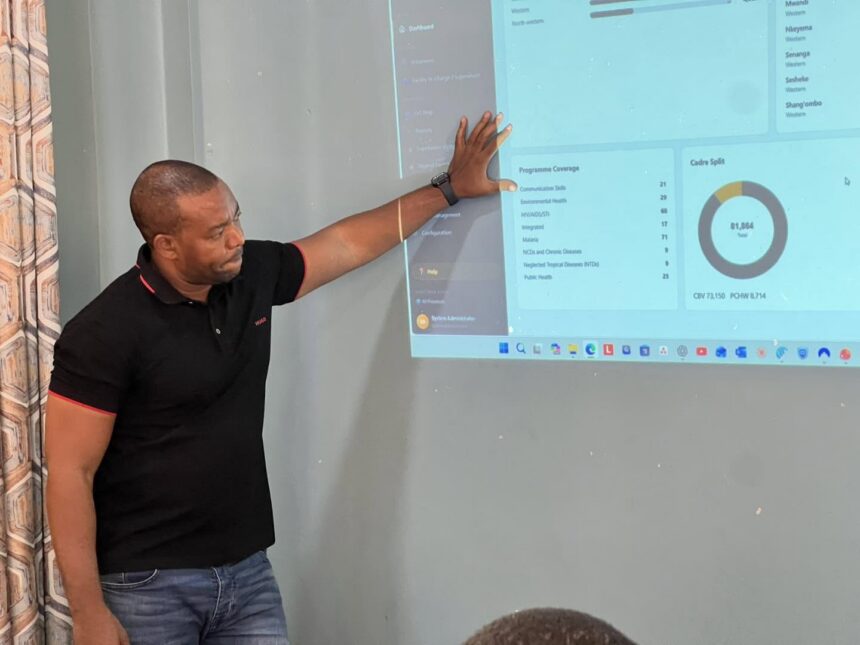
Day Two of the Community-Based Volunteers (CBV) Masterlist Management and Maintenance Training marked a clear shift from theory to hands-on practice as participants engaged directly with the system used to manage community health workforce data. The training focused on building practical skills in accessing, updating and managing the CBV Masterlist System, which plays a central role in strengthening community health service delivery across the country. Participants worked through real system functions designed to improve how Community Health Workers and volunteers are recorded and tracked. The emphasis was placed on ensuring that health data remains accurate, current and usable for decision making at all levels of the health system. This practical approach helped participants understand how digital tools can directly improve planning and service delivery in community health programmes.
The sessions placed strong focus on data quality and accountability, highlighting how these two elements determine the effectiveness of community health systems. Participants explored how the integration between the Community Health Management Information System and the Community Health Information Platform improves coordination and reduces gaps in reporting. They learned how accurate data entry supports better workforce planning, including deployment and supervision of Community-Based Volunteers in rural and urban communities. The training also demonstrated how outdated or incomplete records can weaken decision making and limit the ability of health managers to respond to community needs. Through guided exercises, participants practiced updating records and reviewing system outputs to ensure consistency and reliability of information used for planning.
Participants from different regions shared insights on how the training is improving their understanding of digital health systems and workforce management. Among them was Clara Satela, Community Health Focal Point Person from Lupososhi District Health Office in Northern Province, who described the training as a valuable opportunity to build practical knowledge. She highlighted how working in a rural setting makes accurate data even more important for effective service delivery. She said, “As a participant from Lupososhi District in Northern Province, a primarily rural setting, I have gained valuable knowledge on data quality, master list management, volunteer tracking, and system integration. The discussions have strengthened my understanding of the critical role accurate data plays in planning, resource allocation, and improving community health services. I appreciate the opportunity to learn, share experiences with colleagues, and contribute to strengthening community health information systems. I look forward to applying these lessons in my district to improve data quality and support better health outcomes.” Her experience reflects the broader learning goals of the training, which aim to strengthen capacity at district level for improved health outcomes.
Support from UNICEF was highlighted during the training, with a focus on the importance of the masterlist as the core system for managing Community Health Workers. UNICEF Community Health Specialist Nonde Chama explained that the system is essential for tracking deployment, monitoring performance and supporting supervision of health workers at community level. He noted that without properly trained personnel, data quality can decline quickly, leading to outdated or inaccurate records that affect planning and coordination. He also emphasized that UNICEF is supporting the training to ensure the masterlist becomes a reliable national planning tool that provides real time information on workforce numbers, distribution and capacity. As the training progresses, participants are expected to strengthen their ability to maintain high quality data and improve coordination of community health services, contributing to stronger health systems and healthier communities across the country.