




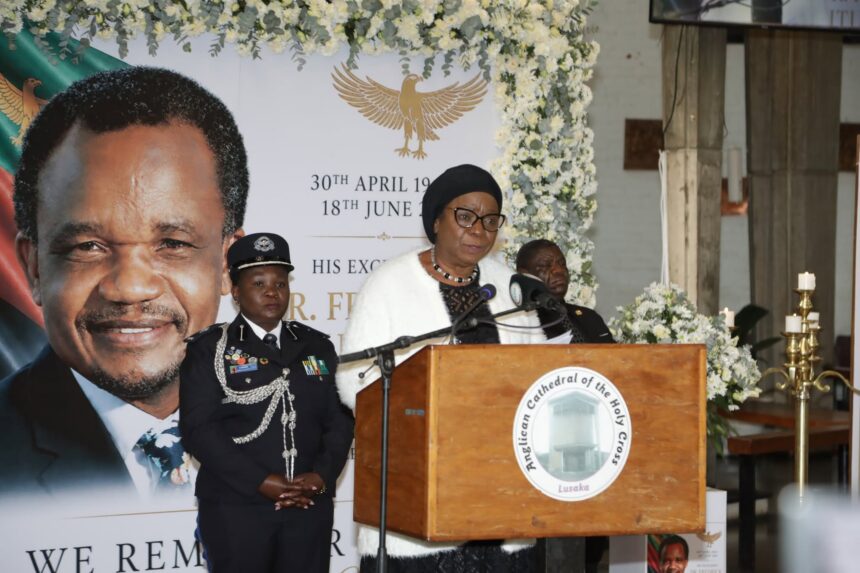
The 15th Memorial Church Service held in honour of former Zambian President Dr. Frederick Jacob Titus Chiluba brought together government leaders, the Chiluba family, church representatives, members of the diplomatic corps and citizens from across the country. The gathering reflected a shared moment of remembrance for a leader whose role in Zambia’s political and social development remains significant. Vice President Dr. W.K. Mutale-Nalumango attended the service on behalf of President Hakainde Hichilema and the Government of the Republic of Zambia. She delivered a message of tribute that highlighted Chiluba’s contribution to national progress and democratic reform. The service served as both a remembrance ceremony and a national reflection on leadership and legacy.
Dr. Chiluba’s life was marked by active public service that began long before his presidency. He first emerged as a strong trade unionist who advocated for workers’ rights and better working conditions across Zambia. His leadership in the labour movement helped strengthen collective bargaining structures and gave workers a stronger voice in national affairs. Over time, he transitioned into politics where he played a central role in shaping Zambia’s governance direction. His journey from union leadership to Head of State remains a defining example of political transformation in the country’s history.
One of the most significant aspects of Dr. Chiluba’s legacy is his contribution to Zambia’s shift to multi party democracy. His leadership during this period helped open political space and introduced competitive democratic processes that continue to define the country’s governance system today. The transition marked a major turning point in Zambia’s history and influenced the direction of political participation and civic engagement. His presidency is often associated with bold reforms that reshaped national institutions and encouraged broader political expression. These developments continue to be referenced in discussions about Zambia’s democratic evolution.
Beyond political reform, Dr. Chiluba’s administration focused on improving living conditions through initiatives related to housing, transport and support for small businesses. His leadership emphasized the importance of economic participation at grassroots level, particularly for emerging entrepreneurs and working families. Many of the policies introduced during his tenure were aimed at expanding access to opportunity and strengthening economic activity across communities. His approach to governance reflected a belief in empowering citizens to contribute directly to national development. These efforts remain part of the broader assessment of his impact on Zambia’s socio economic growth.
During the memorial service, Vice President Mutale-Nalumango encouraged citizens to reflect on the values of patriotism, unity and service that were associated with Dr. Chiluba’s public life. She emphasized that nation building requires consistent commitment, sacrifice and a shared responsibility to protect democratic gains. She also extended condolences to the Chiluba family, acknowledging their personal loss and the continued national recognition of Dr. Chiluba’s contribution to Zambia. The ceremony concluded with prayers and messages of remembrance that underscored the importance of preserving national history. Dr. Chiluba’s legacy continues to be remembered as part of Zambia’s ongoing journey toward development and democratic stability.