






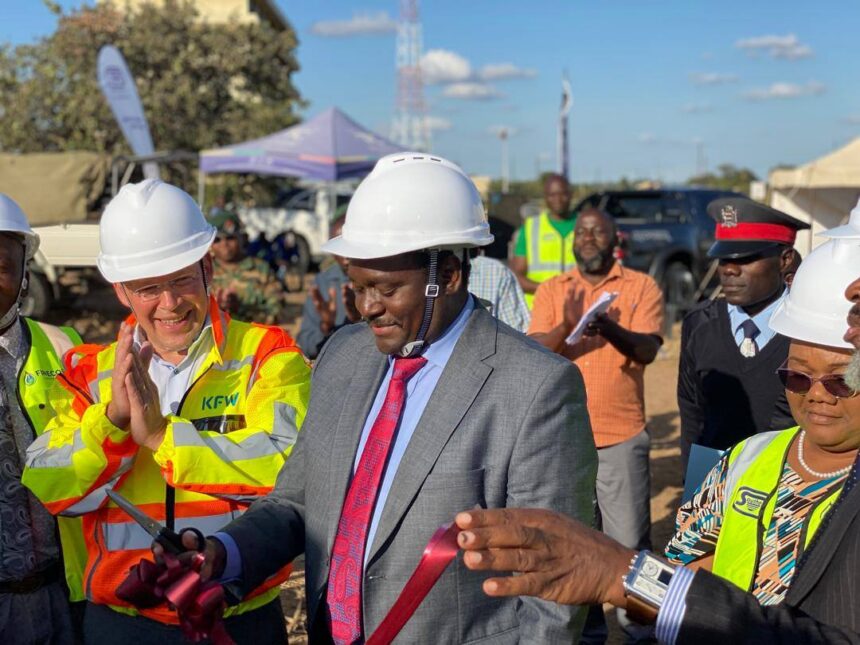
Access to clean and reliable water remains one of the most important services for any growing community. In Choma, residents and businesses have long faced challenges linked to aging water infrastructure, which has placed significant pressure on the town’s water supply system. Leaking and burst pipes have contributed to water losses that reduce efficiency and increase the difficulty of delivering water to homes and institutions. Much like trying to fill a bucket from a leaking pipe, valuable water resources have been lost before reaching consumers. However, a major infrastructure upgrade supported through German-Zambian cooperation is now set to transform the situation and strengthen water security for the people of Choma.
For many years, aging transmission pipelines have struggled to meet the demands of a growing population. As infrastructure ages, pipes become more vulnerable to leaks, bursts, and other technical failures that result in significant water losses. These challenges not only affect the reliability of supply but also increase maintenance costs and place additional pressure on water utility providers. In some cases, water that has already been treated and pumped into the system is lost before it can reach households. Reducing these losses is a critical step toward improving service delivery and ensuring that available water resources are used efficiently.
The ongoing upgrade project focuses on replacing key transmission pipelines that form an important part of Choma’s water distribution network. New pipelines will help reduce water losses caused by leaks and improve the movement of water across the system. Modern infrastructure is designed to be more durable, efficient, and capable of handling growing demand. By replacing older sections of the network, the project will help create a more reliable water supply for residents and businesses. This investment is expected to deliver long-term benefits that extend far beyond immediate repairs.
A major component of the project also involves the rehabilitation of eight boreholes equipped with solar-powered pumping systems. Boreholes play an important role in supplementing water supplies, particularly during periods of increased demand or reduced surface water availability. The introduction of solar-powered pumps will allow these facilities to operate more sustainably while reducing dependence on conventional energy sources. Renewable energy solutions can help lower operational costs and improve the reliability of water production. This approach reflects a growing commitment to combining infrastructure development with environmentally sustainable technologies.
In addition to physical upgrades, the project includes the installation of modern monitoring equipment that will improve the management of the water system. Advanced monitoring tools allow operators to detect leaks more quickly, track system performance, and identify potential problems before they become major disruptions. Better data collection and analysis can lead to faster response times and more efficient maintenance planning. These technologies provide water utilities with the information needed to make informed decisions and improve service delivery. As a result, customers are more likely to experience consistent and reliable access to water.
The collaboration between Germany and Zambia demonstrates the importance of international partnerships in addressing infrastructure challenges and supporting sustainable development. Investments in water infrastructure have far-reaching impacts that extend beyond access to water alone. Reliable water services contribute to public health, economic productivity, education, and overall quality of life. Communities benefit when households, schools, healthcare facilities, and businesses have dependable access to clean water. Such projects also support broader national goals related to development and resilience.
As Choma continues to grow, the demand for reliable water services will continue to increase. The ongoing infrastructure upgrades are an important step toward meeting future needs while reducing inefficiencies that have affected the system for years. By replacing aging pipelines, rehabilitating boreholes, introducing solar-powered pumping systems, and deploying modern monitoring technology, the project is creating a stronger and more sustainable water network. Most importantly, it will help ensure that water reaches the people who need it rather than being lost through leaks and damaged infrastructure. The investment represents a significant milestone for Choma and offers hope for a future where reliable water supply supports both community wellbeing and economic growth.