







The 79th World Health Assembly has officially closed in Geneva, Switzerland, marking another important moment for global cooperation in advancing health for all. The meeting was convened under the leadership of the World Health Organization and brought together member states from across the world. It took place in Geneva, a key hub for international diplomacy and global health decision making. The Assembly focused on strengthening collaboration to address shared health challenges and improve outcomes for populations worldwide. It also reinforced the importance of joint action in building stronger health systems.
The Assembly operated under the theme “Reshaping global health: a shared responsibility,” which guided discussions among all participating countries. Member states engaged on a wide range of priorities aimed at improving health equity and system resilience. The discussions emphasized the need for stronger preparedness for future health emergencies and more coordinated global responses. The World Health Organization played a central role in facilitating negotiations and aligning global health strategies. Countries also reviewed progress on long term health goals and identified gaps that still need urgent attention.
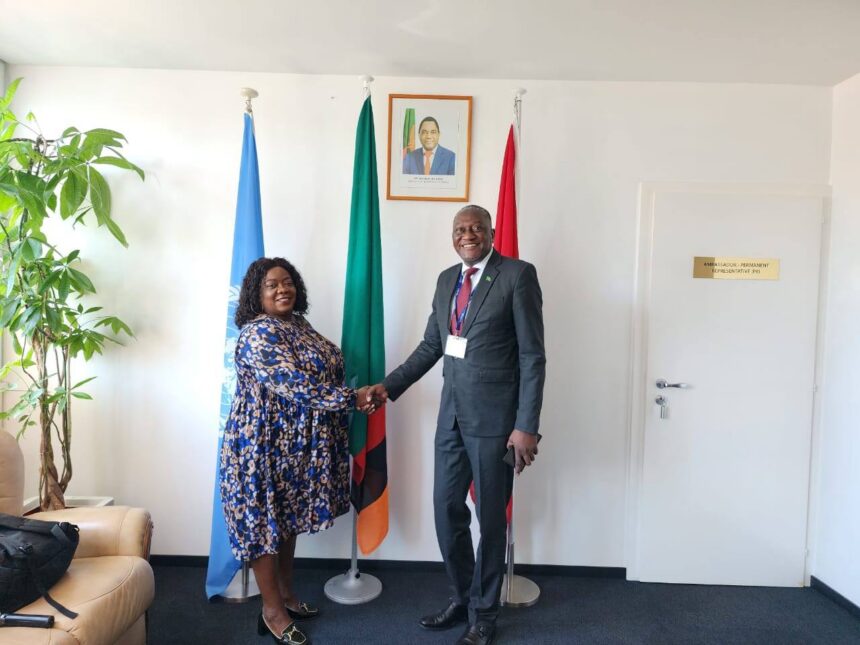
Zambia was represented by a delegation led by the Ministry of Health Permanent Secretary for Technical Services, Dr Kennedy Lishimpi, a designated health policy leader and technical expert. Professor Roma Chilengi, Director General of the Zambia National Public Health Institute, served as his alternate during the Assembly proceedings. The delegation represented Zambia’s health priorities within the broader discussions of the World Health Organization. The Zambia National Public Health Institute continues to play a central role in disease surveillance, preparedness, and response coordination in the country. Zambia’s participation highlighted its commitment to contributing actively to global health governance and collaboration.
Key highlights of the Assembly included continued engagement on the WHO Pandemic Agreement, which aims to improve global coordination during future health crises. Member states also renewed commitments to strengthening health emergency preparedness and response systems. Progress was made on developing a post 2030 tuberculosis strategy to accelerate global efforts to end the disease. Discussions also placed stronger focus on noncommunicable diseases, mental health, primary health care, universal health coverage, sustainable health financing, and health equity. These priorities reflect growing global concern about both infectious and long term health challenges.
On the sidelines of the Assembly, the Zambian delegation took part in strategic engagements that focused on practical health system improvements. These included discussions on local manufacturing of vaccines and essential health commodities to reduce dependency on external supply chains. The delegation also engaged on antimicrobial resistance, which remains a growing global health threat. Climate change and its impact on health systems was another key area of discussion. Additional engagements focused on domestic health financing and regional cooperation on cholera prevention, control, and elimination.
These engagements provided Zambia with opportunities to share experiences and strengthen partnerships with other countries and health institutions. They also supported efforts to develop practical solutions that improve access to essential medical products and strengthen health system resilience. Zambia used the platform to reinforce its priorities in public health security and service delivery improvement. The discussions helped align national efforts with global strategies aimed at achieving better health outcomes. They also supported ongoing work to prepare for future public health threats.
Zambia’s participation at the 79th World Health Assembly reaffirmed its commitment to global health cooperation and national health system strengthening. The country continues to focus on improving health services, strengthening preparedness, and promoting equitable access to care for all citizens. The Ministry of Health remains committed to working with international partners, communities, and stakeholders to build a stronger and more resilient health system. This engagement reflects Zambia’s long term vision of advancing health for all while contributing to global health security efforts.