





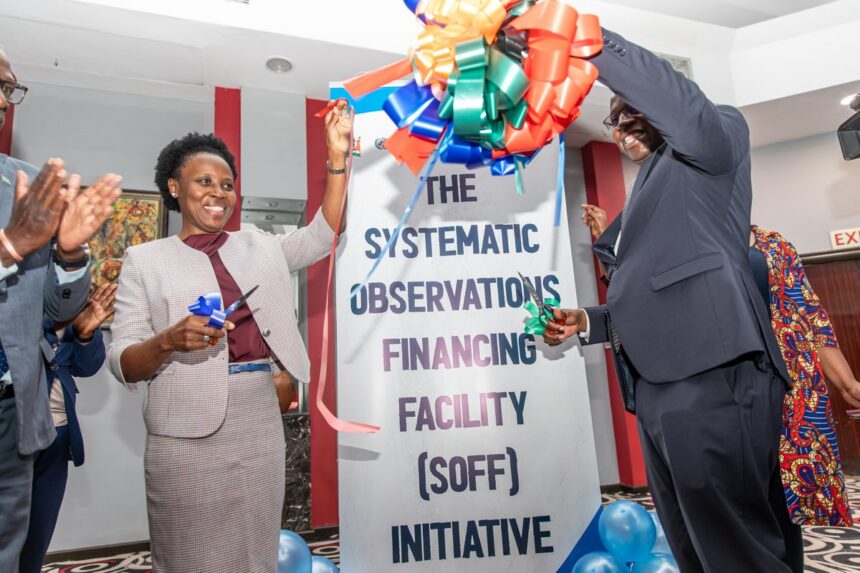
The Government of Zambia has taken a major step in strengthening its national climate and weather monitoring capacity through the launch of the investment phase of the Systematic Observations Financing Facility. The initiative was launched yesterday in partnership with the World Food Programme, the United Kingdom’s Met Office and the World Meteorological Organization. It is designed to improve how Zambia collects, processes and uses weather and climate data for national planning and emergency response. The programme reflects a growing focus on climate resilience and early warning systems in Zambia. It also highlights the government’s commitment to building stronger systems that support both economic development and environmental protection.
The investment phase will be implemented through the Ministry of Green Economy and Environment and coordinated by the Zambia Meteorological Department. The programme will upgrade and automate 21 existing surface weather observation stations across the country. It will also install four upper-air stations to improve the accuracy and depth of atmospheric data collection. These improvements will strengthen how Zambia monitors rainfall, temperature, wind patterns and broader climate shifts. The upgrades aim to support faster and more reliable data generation that can guide national decision-making across multiple sectors.
Key international partners are playing a central role in supporting the initiative and ensuring its technical success. The World Food Programme is contributing expertise in linking climate data to food security and early warning systems. The United Kingdom’s Met Office is providing technical support for weather forecasting systems and modern observation technologies. The World Meteorological Organization is guiding global standards for climate data collection and system integration. These partnerships bring together global experience and local implementation capacity to strengthen Zambia’s long term resilience planning. The collaboration also ensures that Zambia’s systems align with international best practice in meteorology and climate science.
The Systematic Observations Financing Facility investment phase is expected to deliver wide ranging benefits for national development and disaster preparedness. Improved weather and climate data will support anticipatory action for floods, droughts and other climate related risks. The upgraded systems will also enhance planning in critical sectors such as agriculture, water resources and energy management. Institutions like the Ministry of Green Economy and Environment and the Zambia Meteorological Department will play a key role in translating data into practical decision making tools. These efforts will help reduce vulnerability and strengthen resilience across communities and economic sectors.
The launch of this initiative marks a significant milestone in Zambia’s efforts to build a climate resilient future supported by reliable scientific data. With improved observation infrastructure and stronger international cooperation, the country is positioning itself to respond more effectively to climate challenges. The focus on modernising weather systems supports long term development goals and improves the safety and productivity of key sectors. The collaboration between government and global partners reinforces the importance of shared responsibility in addressing climate risks. The initiative represents a strategic investment in strengthening systems that will support informed planning and sustainable growth for years to come.