







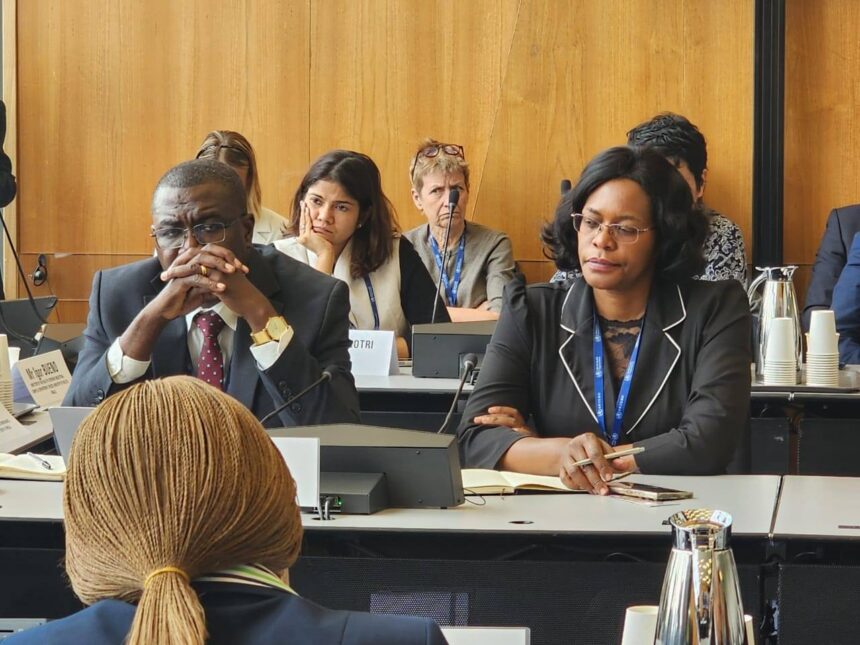
Zambia is pushing forward a major shift in how it prepares for and responds to public health threats, with a strong focus on local production of medical countermeasures. The country has reaffirmed its commitment to building systems that improve equitable access to healthcare and strengthen national resilience against outbreaks. This direction was highlighted during discussions at the World Health Assembly, where health leaders emphasized the importance of self-reliant health systems. The approach reflects growing urgency as countries face repeated health emergencies linked to infectious diseases and climate-related shocks. Zambia’s strategy aims to reduce dependence on external supply chains while improving speed and efficiency in emergency response.
During a high-level side event at the same assembly, the Zambia National Public Health Institute Director General and Special Advisor to the President on Health, Prof. Roma Chilengi, outlined lessons learned from recent outbreaks. He pointed to cholera, Mpox, and climate-driven health emergencies as clear signals that countries need stronger local capacity. He explained that Zambia’s cholera response combined vaccination efforts with broader public health interventions to control the spread of disease. The country deployed targeted Oral Cholera Vaccine campaigns in high-risk districts while also strengthening surveillance systems and rapid response teams. Community engagement, clinical care improvements, and water, sanitation, and hygiene interventions also played a central role in reducing transmission.
Prof. Chilengi stressed that vaccines alone cannot fully control outbreaks without strong supporting systems in place. He explained that effective outbreak control requires early detection, coordinated response mechanisms, and reliable access to a wide range of medical tools. Zambia’s experience demonstrated that integrated approaches deliver stronger outcomes than isolated interventions. The country is now using these lessons to shape long-term health planning and investment decisions. This includes a stronger focus on readiness, coordination across sectors, and rapid deployment of essential supplies during emergencies.
As part of its long-term strategy, Zambia is actively expanding its capacity for local manufacturing of vaccines and related health products. Plans are underway to produce Oral Cholera Vaccines locally, with the first Zambia-filled and finished doses expected in 2026. This milestone represents a major step toward reducing reliance on imported vaccines and strengthening regional supply chains. The country is also working toward establishing full end-to-end vaccine manufacturing capacity within the next 36 to 48 months. This expansion is designed to support both national health needs and broader regional demand during outbreaks and emergencies.
Beyond vaccines, Zambia’s vision includes local production of diagnostics, laboratory reagents, emergency medicines, personal protective equipment, water sanitation commodities, and digital health technologies. This wider approach aims to strengthen every stage of outbreak preparedness and response. Prof. Chilengi called for increased international investment in African manufacturing ecosystems and stronger technology transfer partnerships. He also emphasized the need for regulatory harmonization, expanded research capacity, and workforce development across the continent. He stated that building local production capacity is not only a health requirement but also a long-term investment in equity, resilience, preparedness, and global solidarity. The strategy positions Zambia as an emerging contributor to regional health security while reinforcing the principle that effective global health systems depend on strong local capacity.