







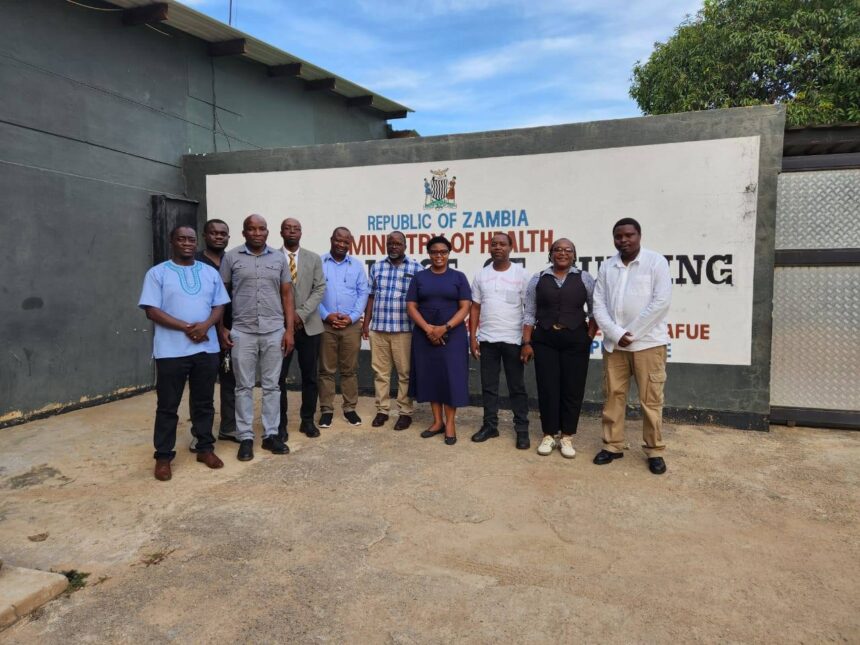
Officials from the Ministry of Health, the University of Zambia, and the Presidential Delivery Unit camped at Kafue School of Nursing last week to analyze data on how Zambians access essential medicines from public health facilities. This exercise follows a directive from His Excellency President Hakainde Hichilema in 2025 to conduct a nationwide review of the pharmaceutical supply chain. The review was prompted by complaints and concerns from citizens and stakeholders regarding medicine availability in public health facilities across the country. President Hichilema emphasized that all Zambians, regardless of location, must have access to quality healthcare services. The initiative also coincides with a significant increase in health sector funding, rising from K1.4 billion in 2021 to K6.4 billion in 2026, reflecting the government’s commitment to improving service delivery.
Dr. Aubrey Kalungai, a senior lecturer at the University of Zambia and team lead at Kafue, highlighted the importance of the gathering for reviewing and analyzing the collected data. Following the presidential directive, a team of surveyors was assembled to conduct a nationwide research project, which commenced in December 2025. The team collected data from 355 public health facilities, employing multiple methodologies including interviews with community members and health staff. The goal of the exercise was to produce a detailed understanding of how citizens access essential medicines and to identify gaps in supply chain efficiency. This meeting at Kafue allowed experts to synthesize findings and draw actionable conclusions for improving service delivery across the country.
The survey represents a critical step in reconciling reported supply chain performance with patient experiences at the service delivery level. Dr. Kalungai emphasized that the analysis will inform targeted interventions to enhance the last-mile delivery of medicines and ensure that investments translate into tangible benefits for communities. By identifying gaps in distribution and accessibility, the government can strengthen systems to prevent shortages and improve the reliability of essential medicines in every province. The review also seeks to ensure that health facilities operate equitably, so that rural and urban populations alike can access life-saving drugs. The findings are intended to guide policy decisions and operational improvements that align with the aspirations of the United Party for National Development.
President Hichilema has consistently stressed the need for measurable improvements in healthcare outcomes following increased investments. The research and analysis undertaken at Kafue School of Nursing align with this vision by providing concrete data to support evidence-based interventions. Dr. Kalungai noted that the study also promotes accountability within the health sector, ensuring that increased funding results in better service delivery for ordinary Zambians. The data collected not only highlights successes but also points to areas requiring immediate attention, including supply chain bottlenecks and distribution inefficiencies. By addressing these challenges, the government aims to enhance access to essential medicines, reduce preventable health risks, and improve overall patient care.
The Kafue review is expected to produce a near-complete draft report by April 1, 2026, with the full report ready for presentation to relevant authorities and ultimately to the Head of State. This milestone represents the culmination of months of research, fieldwork, and expert analysis. The findings will inform strategic actions to strengthen the pharmaceutical supply chain, improve medicine availability, and ensure that healthcare investments benefit all Zambians. By prioritizing this initiative, the government demonstrates a commitment to equitable, high-quality healthcare. The work at Kafue School of Nursing underscores the importance of evidence-driven policy in transforming public health service delivery and enhancing the well-being of citizens across the nation.