






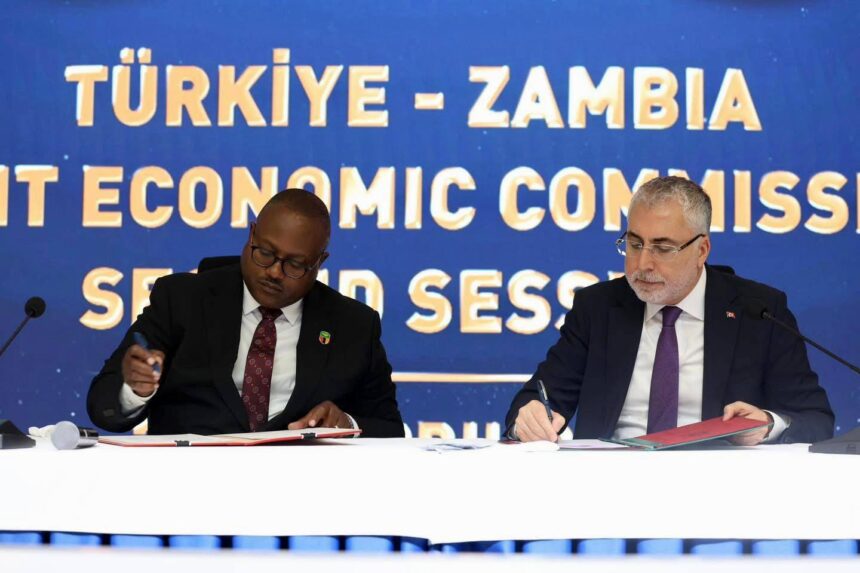
Zambia and Türkiye have reinforced their economic partnership following a high level meeting aimed at advancing trade, investment and industrial cooperation. The Second Session of the Zambia–Türkiye Joint Economic Commission brought together senior officials from both countries to review progress and set new priorities. Held in Ankara on 22 April 2026, the session marked a key moment in strengthening bilateral relations. Both nations signaled a clear intention to move beyond discussions and focus on delivering measurable outcomes. This renewed commitment reflects a broader strategy to deepen economic ties and unlock new opportunities for growth.
During the session, Mulambo Haimbe emphasized the need for practical implementation of agreements already discussed between the two countries. He called for a shift from dialogue to action, highlighting that successful partnerships depend on tangible results. His remarks focused on ensuring that commitments made during bilateral engagements translate into real economic benefits. This approach aligns with Zambia’s current push to accelerate development through targeted international cooperation. By prioritizing execution, Zambia aims to maximize the impact of its global partnerships.
A major outcome of the meeting was the conclusion of negotiations on a double taxation agreement between Zambia and Türkiye. This agreement is expected to play a crucial role in improving the investment climate between the two nations. By reducing tax related barriers, it will make cross border business more efficient and predictable. Investors often view such agreements as a sign of stability and commitment to fair economic practices. As a result, the deal is likely to attract increased foreign direct investment and encourage joint ventures. It also sets a foundation for long term economic collaboration.
Zambia used the platform to outline its industrialisation agenda, positioning Türkiye as a key partner in several priority sectors. These include infrastructure development, engineering, and technology, which are critical for economic transformation. The Zambian delegation also highlighted opportunities in energy, mining, agriculture, and small and medium enterprises. These sectors are central to job creation and sustainable growth within the country. By engaging Türkiye in these areas, Zambia aims to leverage expertise, technology transfer and capital investment. This strategy supports the country’s goal of building a diversified and resilient economy.
On the Turkish side, Vedat Işıkhan reaffirmed his country’s commitment to expanding its presence in Africa. He noted that Türkiye has steadily increased its trade and investment footprint across the continent in recent years. His remarks highlighted confidence in the evolving legal and institutional frameworks guiding bilateral cooperation. These frameworks are expected to create a stable environment for businesses from both countries. Türkiye sees Zambia as a strategic partner within Southern Africa, offering access to regional markets and economic opportunities. This perspective strengthens the foundation for long term engagement.
The session concluded with both parties adopting agreed minutes that outline specific areas of cooperation and timelines for implementation. This document serves as a roadmap for future engagement and ensures accountability on both sides. It also reflects a shared understanding of priorities and the need for coordinated action. Effective implementation of these agreements will determine the success of the partnership moving forward. The focus now shifts to monitoring progress and ensuring that commitments are translated into real outcomes.
The Second Joint Economic Commission session represents a significant step in advancing Zambia and Türkiye’s economic relationship. Both countries have demonstrated a clear willingness to deepen cooperation through practical measures and strategic alignment. The agreements reached, particularly the double taxation deal, are expected to drive investment and strengthen trade links. With a focus on key sectors and structured implementation, the partnership is positioned to deliver meaningful results. As both nations move forward, sustained collaboration and accountability will be essential in achieving their shared economic goals.