






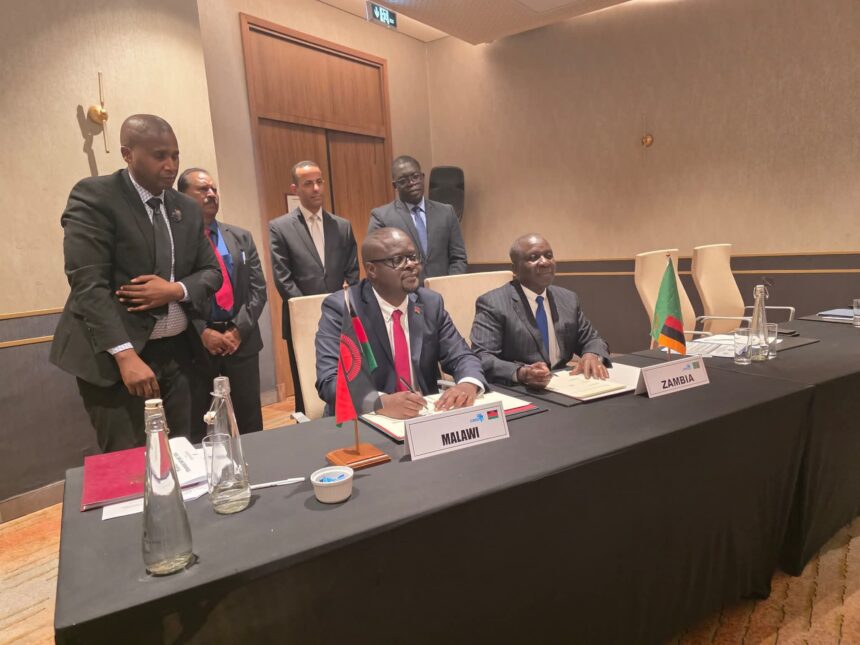
Zambia and Malawi have signed a mutual recognition agreement aimed at facilitating the trade of key agricultural commodities between the two countries. The agreement covers major crops including maize, sorghum, rice, soybean, beans, and groundnuts.
The signing ceremony took place on Monday, with Zambia’s Agriculture Minister Mtolo Phiri emphasizing the importance of the deal in strengthening regional integration and economic growth. Minister Phiri stated, “Today marks a significant milestone in our efforts to enhance regional integration as espoused under the Common Market for Eastern and Southern Africa (COMESA) treaty, to improve trade and contribute to economic development for our two nations.”
The agreement focuses on harmonizing grading standards between Zambia and Malawi. By aligning quality and safety requirements, the deal will simplify cross-border trade, reduce delays at customs, and eliminate technical barriers that have previously hindered agricultural exports and imports.
Improved market access is another key benefit of this agreement. Farmers and traders in both countries will find it easier to sell and buy agricultural commodities, creating more competitive markets and increasing income opportunities for smallholder farmers and agribusinesses.
The mutual recognition agreement is expected to boost agricultural trade volumes, enhance food security, and contribute to rural development. It supports broader regional integration goals under COMESA by promoting free movement of goods and reducing trade friction.
This deal comes at a time when both Zambia and Malawi are prioritizing agricultural development as a cornerstone for economic growth and poverty reduction. By working together to align standards and facilitate trade, the two nations position themselves to better meet domestic food demands and explore export opportunities.
In summary, the mutual recognition agreement between Zambia and Malawi will foster closer cooperation in agricultural trade. It will ease the movement of maize, sorghum, rice, soybean, beans, and groundnuts across borders, improve market efficiencies, and contribute to the economic development of both countries.
This agreement exemplifies the power of regional partnerships in addressing trade challenges and advancing shared development goals within the COMESA framework.