


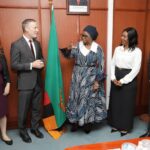



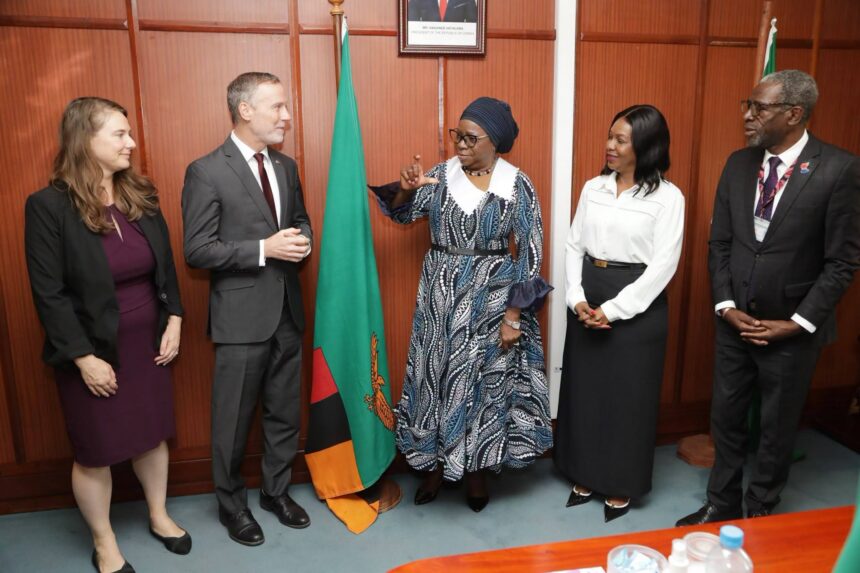
Zambia and the United States of America continue to explore opportunities to strengthen their longstanding bilateral relations, with a focus on trade and investment, regional peace and security, and health sector development. Zambia’s Vice President, Dr. W.K. Mutale-Nalumango, highlighted the importance of this partnership after receiving a courtesy call from Mich Coker, Chargé d’Affaires at the United States Embassy in Zambia. The meeting provided an opportunity for the two sides to reflect on the relationship between the two countries and discuss ways to expand cooperation in areas of mutual interest. The Vice President emphasised the importance of open dialogue, mutual respect and shared priorities in building a partnership that delivers practical benefits for citizens. The engagement also highlighted the role international cooperation can play in supporting Zambia’s economic growth, creating employment opportunities and improving the livelihoods of its people.
The courtesy call between Vice President Mutale-Nalumango and US Chargé d’Affaires Mich Coker reflects the continued importance of diplomatic engagement between Zambia and the United States. Such meetings provide opportunities for government representatives and diplomatic officials to exchange views, review areas of cooperation and identify priorities for future engagement. They also help maintain communication on matters that affect the interests of both countries. Through regular dialogue, Zambia and the United States can explore ways to strengthen existing partnerships while considering new opportunities for collaboration. The meeting reaffirmed Zambia’s interest in maintaining constructive relations with the United States and pursuing cooperation that supports the development priorities of both nations.
Trade and investment remain important areas of cooperation between Zambia and the United States. Stronger commercial relations can create opportunities for businesses, encourage investment and support economic activity across different sectors. For Zambia, attracting investment can contribute to industrial development, business expansion and employment creation when projects respond to national priorities and deliver sustainable benefits. Cooperation can also help businesses identify opportunities to enter new markets, establish partnerships and develop productive activities. However, turning diplomatic engagement into measurable economic results requires continued discussions, practical agreements and an environment that supports responsible investment. The Vice President’s remarks underline the importance of maintaining a relationship that encourages economic cooperation and contributes to Zambia’s broader development ambitions.
The partnership between Zambia and the United States also has significance for regional peace and security. Stability in Southern Africa and the wider African region supports trade, investment and cross-border cooperation. It also helps countries address shared challenges that can affect communities, economies and public institutions. Through diplomatic engagement, Zambia and the United States can exchange perspectives on regional developments and explore areas where cooperation serves their mutual interests. Zambia’s position within the region makes constructive international partnerships relevant to its economic and security priorities. Continued dialogue can help sustain cooperation on issues that require coordination between countries and regional institutions.
Health sector development is another area identified by the Vice President as important to Zambia’s partnership with the United States. International cooperation in healthcare can support efforts to improve health services, strengthen institutional capacity and respond to public health challenges. Effective partnerships may involve technical cooperation, skills development, health systems support and other forms of collaboration, depending on the programmes agreed by the participating countries. For Zambia, strengthening healthcare remains important to protecting communities and improving the quality of life of citizens. Cooperation in this sector can be most effective when initiatives align with national priorities and support the long-term capacity of local institutions. The meeting highlighted health development as one of the areas in which continued engagement between the two countries remains valuable.
Vice President Mutale-Nalumango also stressed the importance of building partnerships based on mutual respect, shared priorities and tangible benefits for the people of both countries. This approach recognises that successful bilateral relations require more than formal meetings and diplomatic statements. They depend on sustained communication, clear objectives and a willingness to work together on issues of common concern. For Zambia, international partnerships must contribute to national development while respecting the country’s priorities and interests. For the United States, cooperation with Zambia provides a channel for engagement on economic, health and regional matters. A relationship built on mutual respect can create a foundation for identifying shared interests and developing practical initiatives that benefit both Zambian and American citizens.
The Vice President connected Zambia’s international partnerships to the government’s Grow Zambia Agenda, which focuses on advancing the country’s development objectives. International cooperation can contribute to this agenda by supporting economic activity, encouraging investment and creating opportunities for skills development and employment. Partnerships with other countries can also help Zambia exchange expertise and strengthen its capacity in areas important to national progress. However, the benefits of international cooperation depend on how effectively agreements and initiatives are implemented. Projects must respond to local needs, use resources responsibly and produce results that citizens can experience. The emphasis on the Grow Zambia Agenda therefore places practical development outcomes at the centre of Zambia’s approach to international engagement.
Job creation is an important consideration in discussions about trade, investment and economic cooperation. New investment can support employment when it leads to business expansion, productive industries and demand for goods and services. Stronger commercial relationships may also create opportunities for Zambian businesses to reach international markets and participate in wider supply chains. These opportunities can support economic diversification and help businesses build their capacity over time. Nevertheless, employment benefits are not automatic and depend on the nature of investments, the skills available in the workforce and the conditions under which businesses operate. Continued cooperation between Zambia and the United States can provide opportunities to explore investment that supports sustainable growth and contributes to improved livelihoods.
The engagement also highlights the importance of maintaining diplomatic relationships in a changing international environment. Countries often work together on several interconnected priorities, including economic development, public health and regional stability. Regular diplomatic contact allows governments to communicate their concerns, discuss areas of agreement and address differences through dialogue. It can also help identify emerging opportunities that may not be fully developed through existing arrangements. For Zambia, maintaining constructive relations with international partners forms part of its broader efforts to support national development and engage with the global economy. The courtesy call by Mich Coker provided an opportunity to reinforce this approach and express Zambia’s interest in continued cooperation with the United States.
Vice President Mutale-Nalumango expressed optimism that continued engagement would strengthen bilateral relations and open new avenues for cooperation between Zambia and the United States. Her remarks reflect the importance Zambia places on partnerships that support economic progress, public welfare and shared interests. The next steps in strengthening these relations will depend on continued dialogue and the development of practical areas of cooperation. Trade and investment, regional peace and security, and health sector development remain important fields for engagement identified during the meeting. Progress in these areas would depend on the priorities agreed by both countries and the effective implementation of future initiatives. The meeting therefore represents an opportunity to sustain diplomatic communication while exploring ways to turn shared interests into meaningful outcomes.
Zambia’s engagement with the United States remains an important part of its efforts to build international partnerships that support national development. The courtesy call between Vice President Dr. W.K. Mutale-Nalumango and US Chargé d’Affaires Mich Coker reaffirmed the value of open dialogue and cooperation based on mutual respect. Their discussions highlighted trade and investment, regional peace and security, and health sector development as key areas of shared interest. The Vice President also emphasised the importance of ensuring that international partnerships contribute to economic growth, job creation and improved livelihoods under the Grow Zambia Agenda. As both countries continue their diplomatic engagement, the focus remains on identifying practical opportunities that serve their respective priorities. Sustained cooperation can help Zambia and the United States build on their longstanding relationship and pursue outcomes that benefit both the Zambian and American people.