

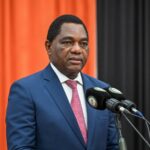




President Hakainde Hichilema has opened the First Session of Zambia’s 14th National Assembly in Lusaka, setting the stage for the government’s policy direction for 2026 and 2027. The session marks a significant moment in Zambia’s parliamentary history, with the National Assembly expanded from 167 to 280 members following constitutional and electoral reforms. The larger legislature introduces a new political landscape, including reserved representation for women, young people and persons with disabilities. President Hichilema enters the session with a comfortable governing majority and an ambitious economic programme under the Grow Zambia Agenda. However, the government also faces calls from churches, business leaders and opposition figures to address the cost of living, strengthen public services and promote national unity after a divisive election period.
The expansion of Parliament follows constitutional changes enacted through the Constitution of Zambia (Amendment) Act No. 13 of 2025. The reforms increased the number of elected constituency seats from 156 to 226 through the creation of 70 additional constituencies. They also introduced mixed-member proportional representation, creating new opportunities for women, young people and persons with disabilities to enter the National Assembly. Under the new arrangement, 40 members enter through proportional representation, comprising 20 women, 15 young people and five persons with disabilities. These changes are intended to broaden representation and give more groups a formal role in Zambia’s legislative process.
The new composition represents a substantial change from the previous Parliament, where women held only 25 of the 167 seats. Reserved representation provides a structured route for groups that have historically faced barriers to political participation. A larger and more diverse legislature can bring a wider range of experiences and community concerns into parliamentary debates. However, representation alone does not guarantee that these concerns will shape legislation or government policy. The effectiveness of the reforms will depend on how MPs participate in debates, scrutinise public spending and represent the needs of their constituents.
Parliament has also undertaken adjustments to accommodate the increased number of lawmakers. Clerk of the National Assembly Loveness Mayaka said seating in the chamber had been expanded, committee rooms refurbished and 70 new constituency offices opened. Multimedia conference systems have also been installed in the chamber and committee rooms to support parliamentary proceedings. Accessibility improvements include ramps, handrails, Braille facilities, tactile signage and sign language interpretation. These measures are intended to make Parliament more accessible and improve its ability to operate as a modern institution.
The increased membership also creates new demands for parliamentary administration. More MPs mean additional responsibilities for committee work, constituency engagement, legislative scrutiny and coordination across political groups. Effective use of parliamentary facilities and technology will be important in ensuring that the larger House can conduct its business efficiently. The new constituency offices may also help MPs maintain closer contact with the communities they represent. Ultimately, the value of these investments will depend on whether they strengthen public participation and improve the quality of legislative work.
President Hichilema’s governing United Party for National Development holds 169 seats, giving it a working majority in the expanded House. The main opposition, the National Reconciliation Party for Unity and Prosperity, holds 67 seats, while independents occupy 20 seats and smaller parties account for the remaining representation. Although the governing party has sufficient numbers to command a majority in ordinary parliamentary business, it falls short of the 187 votes required for a two-thirds majority in a 280-member House. This means constitutional amendments requiring that threshold would need support beyond the ruling party’s own numbers. The composition of Parliament therefore gives the government considerable legislative strength while preserving the importance of cooperation on matters requiring broader agreement.
The election of parliamentary leadership has offered an early indication of how the new House may operate. Speaker Nelly Mutti and First Deputy Speaker Malungo Chisangano were returned unopposed, while Mufumbwe Independent MP Nshamba Muzungu won the contested election for Second Deputy Speaker. Muzungu defeated Vincent Mwale by 166 votes to 58. The result showed that parliamentary support does not always follow party membership in a simple or predictable way. As lawmakers begin their work, their decisions on legislation, oversight and national policy will provide a clearer picture of how the new political balance functions.
Economic development is expected to feature prominently in President Hichilema’s policy direction for 2026 and 2027. The government’s Grow Zambia Agenda sets ambitious production targets across agriculture, energy, tourism and mining. These include producing 10 million tonnes of maize, generating 10,000 megawatts of electricity and attracting five million tourist arrivals by 2031. The programme also aims to increase copper production to three million tonnes and develop major production and export targets for soya beans, wheat, sugar and beef. Achieving these goals will require investment, reliable infrastructure, effective regulation and coordination between the public and private sectors.
The energy sector is particularly important because electricity supply affects manufacturing, mining, agriculture and small businesses. Reliable power can help companies maintain production, reduce operating disruptions and plan future investment. Expanding electricity generation will require adequate financing, infrastructure development and effective management of the country’s energy resources. Businesses will also be watching for policies that address fuel costs and reduce unnecessary regulatory burdens. The government’s challenge will be to turn its energy targets into practical improvements that support economic activity and create jobs.
Agriculture is another central part of the Grow Zambia Agenda. Higher maize production could strengthen food availability and support farming households, while expanded wheat, soya bean and sugar production could contribute to domestic supply and commercial agriculture. However, agricultural output depends on several factors, including rainfall, irrigation, access to inputs, storage facilities and reliable markets. Climate-related risks can undermine production even when farmers have access to land and other resources. Government policy will therefore need to address both production targets and the conditions that allow farmers to produce, store and sell their crops successfully.
The private sector is seeking clearer direction on how the government intends to support investment and productivity. Private Sector Development Association chairperson Yusuf Dodia has called for measures addressing electricity, fuel and regulation. Business leaders want the government to establish a policy environment in which companies can operate efficiently and contribute to the national development agenda. Investment decisions often depend on confidence in the regulatory framework, access to infrastructure and the ability to forecast costs. The government’s policy statement will therefore be important in explaining how public policy can support business expansion, employment and economic growth.
For households, economic performance is measured not only by production statistics but also by the cost of food, transport, housing and other essential goods. Rising business activity does not automatically translate into better living conditions for every family. The government will need to explain how its economic plans can improve incomes, expand employment opportunities and protect vulnerable households from financial pressure. Stronger agricultural output, reliable electricity and increased private investment could contribute to these objectives if the benefits reach ordinary citizens. The key question is how the national economic agenda will translate into measurable improvements in daily life.
Education is another important issue facing the new Parliament. The Media Network on Child Rights and Development has raised concerns about the pressure that increased school enrolment places on classrooms, teachers and school feeding programmes. Its executive director, Henry Kabwe, has called for additional funding for teacher recruitment and stronger child protection measures. Expanding access to education can create long-term opportunities, but schools also need sufficient staff, learning materials and suitable facilities to provide quality instruction. Parliament will have an important role in examining education spending and ensuring that budget decisions respond to the needs of learners. The government’s policy direction will be judged partly by its ability to balance expanded access with the quality and sustainability of public education.
Beyond economic policy, national unity has emerged as one of the central issues surrounding the opening of the new Parliament. The election period has left political tensions that religious leaders, civil society representatives and opposition figures want the government to address. The Council of Churches in Zambia has called for a clear, people-centred address that acknowledges the challenges facing ordinary citizens. Its general secretary, Reverend Canon James Phiri, has emphasised that national development should be measured by improvements in people’s living conditions, not only by economic indicators and government announcements. He has also warned that inflammatory political language could deepen divisions and weaken national cohesion.
The concerns about political division are reinforced by the continued detention of opposition figures facing treason charges. According to the information provided, NRPUP presidential candidate Brian Mundubile, his running mate Makebi Zulu and 16 others remain in custody in Kabwe. Leadership Movement president Richard Silumbe has called for an inclusive round-table discussion on Zambia’s future. These developments have added to calls for political dialogue and efforts to rebuild trust across the country. Addressing such concerns requires respect for due process, clear communication and constructive engagement among political leaders and institutions.
President Hichilema has indicated that he recognises the importance of national unity. In response to an appeal from the Evangelical Fellowship of Zambia, which urged him to make unity central to his address, the President committed to reaching across party lines and encouraging dialogue. Such engagement could provide an opportunity to reduce political tensions and build agreement on issues of national importance. However, lasting reconciliation requires more than statements of intention. It depends on consistent conduct, open communication and a willingness among political actors to engage with differing views while respecting the law.
The expanded National Assembly gives Zambia an opportunity to strengthen representation and improve legislative oversight, but it also raises expectations for effective governance. MPs must balance party commitments with their responsibilities to constituents and the country as a whole. Parliamentary committees will be important in examining government programmes, reviewing public expenditure and assessing whether policies achieve their stated objectives. The larger House will also need to manage debate efficiently so that increased representation does not prevent timely decision-making. The quality of parliamentary work will ultimately depend on the willingness of lawmakers to scrutinise proposals carefully and place public interests at the centre of their decisions.
President Hakainde Hichilema’s opening of the First Session of Zambia’s 14th National Assembly marks an important point for the country’s political and economic direction. The enlarged Parliament introduces broader representation while giving the government a working majority to advance its policy programme. The Grow Zambia Agenda sets ambitious goals for agriculture, electricity, mining and tourism, but achieving them will require sound planning, investment and effective implementation. At the same time, concerns about living costs, education, political tensions and national unity remain central to the public debate. The success of the new Parliament will depend not only on the policies announced in 2026 and 2027 but also on whether those policies produce tangible improvements in people’s lives and strengthen trust in Zambia’s democratic institutions.