





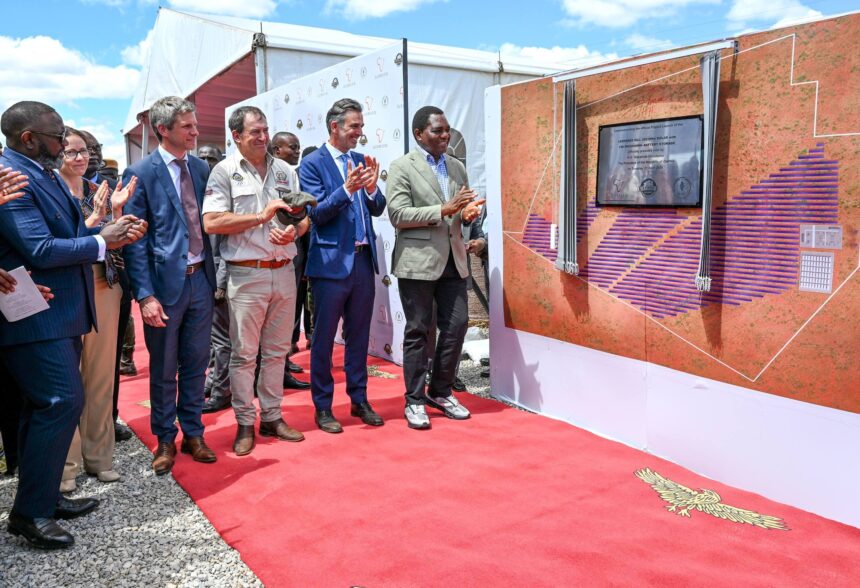
Zambia has taken a major step in strengthening its energy future with the launch of the 250 MW Leopards Hill Solar Project together with the 150 MW Battery Energy Storage System at Kyindu Farms in Chongwe District, Lusaka Province. The announcement reflects a growing shift toward renewable energy and a stronger focus on long term energy security. The project represents one of the largest solar and storage investments in the country to date. It comes at a time when many nations are prioritising cleaner and more stable energy sources. The development signals confidence in Zambia’s policy direction and investment environment.
The project has been driven by increased investor confidence in recent energy sector reforms that encourage private sector participation. These reforms have created space for collaboration between government and private investors in developing large scale infrastructure. The Leopards Hill Solar Project is expected to contribute significant new generation capacity to the national grid. The accompanying battery storage system will help stabilise supply by storing excess energy for use during peak demand periods. This combination improves reliability and reduces pressure on existing hydroelectric systems. It also supports a more balanced and flexible energy network for the country.
A key impact of the project will be the diversification of Zambia’s energy mix. The country has historically relied heavily on hydroelectric power, which can be affected by changing weather patterns and water levels. By expanding solar generation, Zambia reduces its vulnerability to climate related disruptions. The integration of battery storage strengthens this shift by ensuring that solar energy remains available even when sunlight is not present. This improves overall grid stability and supports economic activities that depend on consistent electricity supply. The project also aligns with broader efforts to promote sustainable development and environmental responsibility.
Government leaders have emphasised the importance of protecting this investment as a national asset. The people of Chongwe District have been encouraged to take an active role in safeguarding the infrastructure, which is seen as a shared resource that benefits the entire country. The project is positioned as part of a wider inclusive economic agenda aimed at ensuring that development reaches all citizens. It is expected to create both direct and indirect economic opportunities, including jobs during construction and operation phases. The long term vision is to build a stronger, more resilient energy system that supports growth across all sectors. This development marks a significant milestone in Zambia’s journey toward energy transformation and economic progress.