




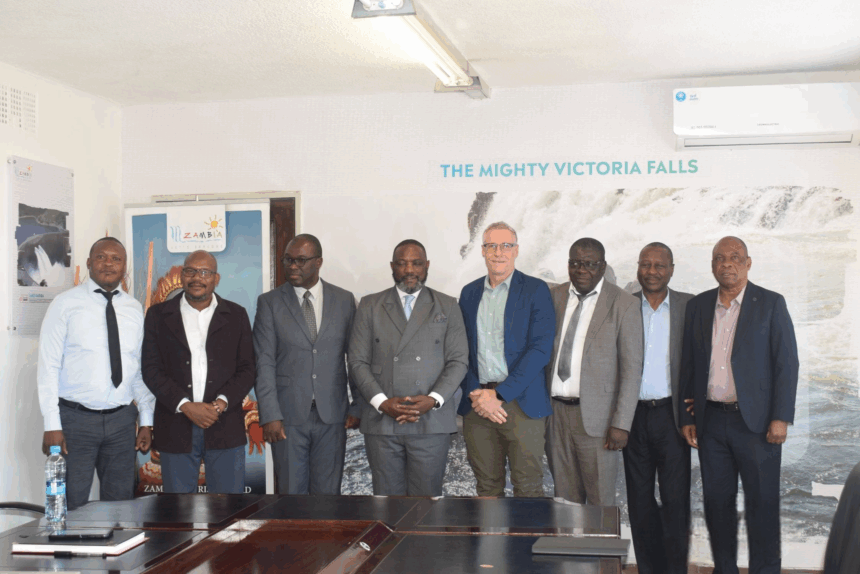
Zambia is reinforcing its commitment to wildlife conservation and sustainable tourism development as the Minister of Tourism, Honourable Rodney Sikumba, continues to drive policies aimed at protecting natural ecosystems and improving protected area management. The minister has emphasized that government priorities are strongly aligned with conservation efforts that address human–wildlife conflict while also strengthening tourism infrastructure across key regions. His remarks came during a courtesy call from the International Fund for Animal Welfare (IFAW) Executive Vice President, Mr. Jason Bell, where both parties discussed ongoing collaboration in conservation projects. The meeting highlighted Zambia’s long term vision of balancing environmental protection with economic development through tourism. It also reinforced the importance of partnerships in achieving measurable conservation outcomes.
Honourable Sikumba noted that current conservation interventions are already producing visible results in ecological protection and wildlife management. He explained that these efforts are improving ecological connectivity, strengthening wildlife protection systems, and opening new opportunities for future conservation investment. The minister stressed that effective management of protected areas is essential for sustaining biodiversity and supporting tourism growth. He also acknowledged that human–wildlife conflict remains a key challenge in some regions, requiring continuous intervention and innovation. According to him, government remains committed to ensuring that communities living near wildlife areas are protected while also benefiting from conservation initiatives. This balance is central to Zambia’s conservation strategy.
A major focus of the discussions was the importance of investing in ranger welfare and operational infrastructure within protected areas. Honourable Sikumba highlighted that rangers play a critical role in safeguarding wildlife and ecosystems, often under difficult conditions. He emphasized the need for improved staff housing, better-equipped command centres, and upgraded operational facilities. These improvements are expected to enhance efficiency and boost morale among conservation staff. Strong welfare systems, he noted, directly contribute to better performance in wildlife protection and enforcement. The government believes that motivated personnel are essential for achieving long term conservation goals.
Tourism infrastructure development was also a key point of discussion during the engagement with IFAW. The minister acknowledged ongoing support from the organization, particularly through projects such as Changa Changa Wildlife Camp and related facilities in Eastern Province. These developments are seen as important contributions to both conservation and tourism expansion. Improved facilities not only support wildlife protection efforts but also attract visitors and increase tourism revenue. Honourable Sikumba expressed appreciation for these investments, stating that they align with Zambia’s broader goal of growing its tourism sector sustainably. He noted that such partnerships help unlock the country’s natural tourism potential.
The minister further commended IFAW for its role in reducing human–wildlife conflict, especially within the Kasungu–Lukusuzi landscape. He highlighted several successful interventions that have made a measurable difference in affected communities. These include the installation of polywire fencing, the introduction of early warning systems, community engagement programs, and the deployment of rapid response teams. Together, these measures have helped reduce the frequency and severity of conflict incidents. Honourable Sikumba pointed out that the decline in reported cases demonstrates the effectiveness of coordinated conservation strategies. He encouraged IFAW to expand these initiatives to other regions experiencing similar challenges.
Mr. Jason Bell, Executive Vice President of IFAW, expressed appreciation for the leadership provided by the Ministry of Tourism under Honourable Sikumba. He noted that government efforts to strengthen legislation and policy frameworks have significantly contributed to reducing human–wildlife conflict. According to him, these improvements have also enhanced Zambia’s reputation as a responsible conservation destination. Mr. Bell added that stronger conservation systems have had a positive impact on tourism, contributing to increased visitor arrivals. He described the progress achieved so far as commendable and encouraging for future collaboration. His remarks underscored the value of continued partnership between government and conservation organizations.
Zambia’s approach to conservation and tourism development reflects a growing recognition that environmental protection and economic growth must work together. Through investments in infrastructure, community engagement, and wildlife protection systems, the country is positioning itself as a leader in sustainable tourism in the region. The collaboration between the Ministry of Tourism and IFAW highlights how strategic partnerships can deliver real benefits for both people and wildlife. As conservation programs expand and tourism infrastructure improves, Zambia is expected to strengthen its appeal as a global tourism destination. The continued focus on ranger welfare, conflict mitigation, and ecological preservation will play a central role in shaping the future of the sector.