







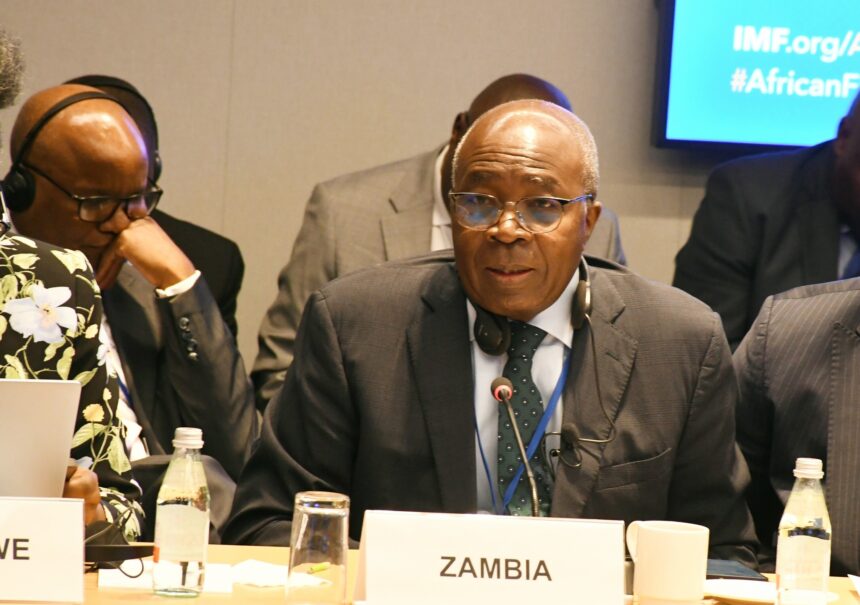
Finance and National Planning Minister Dr Situmbeko Musokotwane has revealed that Zambia’s recent tax relief measures on petroleum products have resulted in an estimated US$200 million loss in potential government revenue. The Minister explained that the fiscal intervention, which included the suspension of excise duty and the zero rating of VAT on fuel, was introduced to cushion citizens and businesses from rising global fuel prices. He made the remarks while addressing Zambia’s response to the emerging war-driven global economic crisis at the IMF–World Bank Spring Meetings in Washington D.C. The discussion took place during a high-level fiscal forum attended by African finance leaders and international development partners. His presentation focused on the difficult balance between protecting households and maintaining fiscal stability in a volatile global environment.
Dr Musokotwane explained that the revenue loss reflects the cost of protecting the economy from external shocks linked to geopolitical tensions. He noted that global disruptions, particularly those linked to conflicts affecting energy markets, have placed significant pressure on domestic economies. He said Zambia chose to reduce fuel-related taxes to prevent sharp increases in transport and production costs. This approach was intended to shield households from inflationary pressure and prevent broader economic slowdown. However, he acknowledged that such measures reduce fiscal space and limit government revenue available for development spending.
Speaking at the IMF Africa Fiscal Forum at the IMF headquarters, the Minister called for a more strategic use of fiscal policy across African economies. He argued that fiscal tools should not only respond to crises but also actively drive long-term economic transformation. He warned that the most immediate risk facing many African countries over the next year is a potential energy crisis linked to instability in the Gulf region. He said such a crisis could push up inflation, increase production costs and further strain already tight national budgets. He stressed that African governments must strengthen resilience through domestic reforms while still seeking international support where necessary.
Dr Musokotwane emphasized that fiscal policy must be used to improve productivity and restructure economies rather than simply manage recurring shocks. He pointed to Zambia’s ongoing reforms as an example of shifting resources toward more productive and socially impactful areas. He highlighted the government’s decision to redirect spending from generalized fuel subsidies to sectors such as free education and social development programmes. This shift, he said, reflects a more targeted approach to public spending that prioritizes long-term human capital development. He added that such reforms help ensure that limited public resources deliver maximum economic and social returns.
The Minister also discussed Zambia’s use of digital systems in agricultural support programmes as part of broader public sector reforms. He said digital tools have improved targeting efficiency and reduced waste in the distribution of agricultural inputs. The systems have also helped eliminate ineligible beneficiaries who previously benefited unfairly from government support. He explained that these reforms ensure that assistance reaches genuine farmers who contribute to national food production. This, he said, strengthens accountability while improving agricultural productivity and rural development outcomes.
Beyond short-term fiscal adjustments, Dr Musokotwane raised deeper concerns about Africa’s long-term economic structure. He questioned why the continent continues to have a limited productive base despite its vast natural resources, young population and economic potential. He noted that Africa’s share of global trade remains low, even in sectors where it once had strong competitive advantages. He pointed out that many countries outside the continent have advanced through sustained investments in skills, manufacturing and value addition. He said this gap highlights the need for Africa to rethink its development strategy and economic priorities.
The Minister argued that fiscal policy must become more ambitious and development focused. He said it should not be viewed only as a tool for managing budgets or responding to crises. Instead, it should be used to support structural transformation across key sectors of the economy. He identified energy expansion, industrialization, human capital development and productivity growth as critical areas that require fiscal support. He explained that economies which diversify and produce more goods are better able to withstand external shocks. Such economies, he said, are less vulnerable to repeated cycles of crisis and instability.
Dr Musokotwane also reflected on lessons from countries that have successfully transformed their economies over time. He noted that many nations that once faced similar development challenges were able to change their economic trajectory through consistent policy reforms and investment in production capacity. He suggested that Africa’s progress will depend on how effectively it uses fiscal policy today to build future resilience. He stressed that external conditions will always matter, but internal policy choices remain the most important factor in shaping long-term outcomes. He encouraged African governments to focus on building stronger and more competitive economies.
In his concluding remarks, the Minister emphasized that Africa must prepare for ongoing external shocks, including potential energy disruptions, while maintaining a clear focus on structural reform. He said the continent’s biggest fiscal challenge is not only managing immediate crises but also building sustainable productive capacity. He called for policies that strengthen energy resilience, expand industrial output and improve global competitiveness. He reiterated that fiscal policy must be used as a strategic tool for transformation rather than short-term survival. His message underscored a dual priority for Africa: managing present risks while actively building the foundation for long-term prosperity.